
Finding the right learning thermostat for a central air conditioner depends on your home wiring, smart home ecosystem, and desired automation. Most users choose between the Google Nest Learning Thermostat for its scheduling intelligence or the ecobee Smart Thermostat Premium for its room-sensing capabilities. Narrow your search by evaluating sensor compatibility and C-wire requirements.
All 10 products side by side — scroll sideways to see every column.
| Best Choice | ||||||||||
| Preview |  | 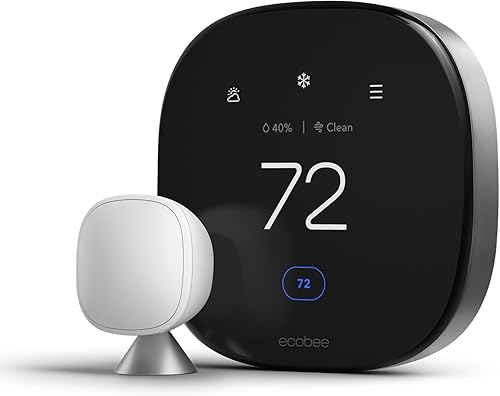 |  |  |  |  |  |  |  |  |
|---|---|---|---|---|---|---|---|---|---|---|
| Product | Google Nest Learning Thermostat | ecobee Smart Thermostat Premium | Honeywell Home T9 | ecobee Smart Thermostat Essential | Sensi Smart Thermostat | Google Nest Thermostat | Amazon Smart Thermostat | Honeywell Home T5 | Meross Matter Smart Thermostat | Honeywell Home RTH9600WF |
| Brand | ecobee | Honeywell Home | ecobee | Sensi | Amazon | Honeywell Home | meross | Honeywell Home | ||
| Best for | Best Overall | Most Advanced Features | Best Room Sensing | Best Essential Smart | Easiest DIY Setup | Most Compact Design | Best Integration | Best Touchscreen Interface | Best Matter Compatibility | Best Color Display |
| The listing says | Saves up to 31% on energy bills Works with most 24V systems | Saves up to 26% on energy bills Includes SmartSensor for room temperature | ENERGY STAR certified for energy savings Auto Home/Away scheduling features | Saves up to 23% on energy costs Compatible with 85% of systems | Privacy protected personal information No C wire required in most applications | ENERGY STAR certified smart thermostat Works without C wire in most homes | Alexa compatible smart thermostat Supports multi-room comfort zones | Saves 8 to 16% on energy bills Eligible for energy savings rebates | Compatible with 95% of HVAC systems Matter-certified for smart home platforms | ENERGY STAR certified energy tracking Eligible for energy savings rebates |
| More information | Price on Amazon | Price on Amazon | Price on Amazon | Price on Amazon | Price on Amazon | Price on Amazon | Price on Amazon | Price on Amazon | Price on Amazon | Price on Amazon |
1. Google Nest Learning Thermostat (4th gen) + Nest Temperature Sensor
Best for: Someone who wants a set-it-and-forget-it system that learns their schedule automatically.
This thermostat is built for those who prefer to let technology handle the fine-tuning. It learns your temperature preferences and detects how outside weather influences your indoor climate, pausing your system to save energy when possible. The larger display and dynamic farsight feature make it easy to see information from across the room.
If you’re a user who prefers manual, minute-by-minute control over every setting, this might feel too automated for your needs. It’s designed to take the guesswork out of efficiency, which can be frustrating if you like to override the schedule constantly.
Good if:
- You want a device that learns your routine.
- You need help managing hot and cold spots.
- You use a variety of smart home voice assistants.
Skip it if:
- You want to manually control every single temperature adjustment.
- You have a very simple system that doesn’t benefit from advanced learning.
2. ecobee Smart Thermostat Premium
Best for: Large homes where different rooms have different temperature needs throughout the day.
This model excels by using a SmartSensor to monitor occupancy and temperature in specific rooms, rather than just the hallway where the thermostat is mounted. It includes a built-in air quality monitor and a speaker that works with Siri or Alexa, turning your thermostat into a secondary smart home hub.
It isn’t the right choice if you want a minimalist, low-profile device, as it’s feature-heavy and requires more interaction to set up its various alerts and sensors. If you don’t plan on using the smart speaker or air quality monitoring features, you may prefer a model without these functions.
Good if:
- You have multiple rooms that suffer from uneven heating.
- You want built-in air quality monitoring features.
- You use Apple HomeKit or Alexa for home control.
Skip it if:
- You prefer a simple device without extra smart speaker functions.
- You live in a small, single-room environment.
3. Honeywell Home T9 WiFi Smart Thermostat with 1 Smart Room
Best for: Users who need a long-range sensor solution for a large or complex home layout.
The T9 is designed to focus comfort on the rooms where people actually are, thanks to sensors that can communicate up to 200 feet away. It’s a solid choice for those who want a reliable, traditional brand experience integrated with modern app control and voice assistant compatibility.
It isn’t for anyone who lacks a C-wire and is uncomfortable with installing a power adapter, as this unit requires a steady power source to function. If your home has unique wiring or lacks that common wire, you’ll need to ensure your setup is compatible before beginning.
Good if:
- You need sensors that cover a very large range.
- You want a system that prioritizes comfort in occupied rooms.
- You rely on a variety of smart home platforms.
Skip it if:
- You don’t have a C-wire and want a truly effortless install.
- You find multi-room sensor management too complex to configure.
4. ecobee Smart Thermostat Essential
Best for: First-time buyers who want the core benefits of smart climate control.
This is a straightforward option for those who want energy management without the bells and whistles of premium models. It offers standard smart features like app control, scheduling, and energy tracking in a compact touchscreen interface. By adjusting to your set schedule, it optimizes comfort while you’re home and saves energy when you’re gone.
Check your system’s compatibility with the online checker on the ecobee support page before buying. It works with most 24 VAC equipment, including gas, oil, electric, dual fuel, and forced air systems. If your home lacks a C-wire, don’t worry; you can use the Power Extender Kit to complete an easy DIY installation.
It isn’t for the power user who wants advanced features like air quality monitoring or a built-in smart speaker. If you need a device that acts as a central hub for your entire home, this unit will be too limited.
Good if: * You want a simple interface for basic scheduling. * You want to save energy without complex routines. * You prefer a compact design.
Skip it if: * You need built-in voice assistant hardware. * You want to monitor indoor air quality.
5. Sensi Smart Thermostat
Best for: Homeowners who want a DIY installation that fits an existing wall footprint perfectly.
The Sensi is built to look and feel like a traditional thermostat, making it an easy transition for those upgrading from older mechanical models. Its main advantage is the built-in level and simple app, which makes the physical installation process very approachable for beginners. Because it fits the same space as traditional hardware, you avoid the common mistake of having to patch and paint your walls after mounting.
If your home lacks a common wire, you can still proceed with this model, as it doesn’t require a c-wire in most applications. This saves you the complexity of hiring a professional electrician to pull new cables.
It isn’t for the user who wants a modern, cinematic, or highly decorative interface. If you’re looking for a high-tech centerpiece for your wall with a large glass screen, the industrial design of this unit may feel dated by comparison.
Good if: * You want to avoid patching or painting your walls. * You need an easy, guided DIY installation process. * You prioritize privacy and data protection.
Skip it if: * You want a large, vibrant, or color-changing touchscreen. * You’re looking for advanced smart home speaker integrations.
6. Google Nest Thermostat
Best for: Someone who wants a minimalist, discreet device that integrates well with Google Home.
This is the most compact option in the lineup, designed to blend into your wall rather than stand out. It offers solid energy-saving features, such as turning itself down when you leave the house and providing helpful maintenance reminders for your HVAC system.
Before buying, use the online Nest Compatibility Checker on the Google Nest support page to confirm your wiring. While the device is designed to work without a C wire in most homes, you’ll need one if you operate a heat pump, a cooling-only system, or a zone-controlled setup. Failing to verify this beforehand often leads to installation delays or the need for additional power accessories.
You can manage your climate from anywhere using a phone, laptop, or tablet. The Savings Finder tool within the Google Home app also suggests schedule tweaks to maximize efficiency. Check with your local energy provider to see if they offer rebates for your purchase.
Good if:
- You want a low-profile, minimalist design.
- You use the Google Home ecosystem or Matter-certified assistants.
- You want automated energy-saving when you’re away.
Skip it if:
- You have a complex, zoned HVAC system.
- You want a large, high-definition touchscreen display.
7. Amazon Smart Thermostat
Best for: Households already deeply invested in the Alexa ecosystem.
This thermostat is designed to be the ultimate companion for Alexa users, allowing for simple voice control and integration with other Amazon devices for presence detection. It provides a reliable way to manage your home temperature with the backing of Honeywell Home technology.
This unit requires one for power, and attempting to force an installation without it will lead to failure. Check your current wiring before purchase to avoid an unnecessary return.
It isn’t for users who prefer Google Home or Apple HomeKit as their primary control platform. If you don’t have an Alexa device to manage the advanced features, you’ll lose a significant portion of what makes this specific unit convenient to operate.
Good if: * You already use Alexa as your primary smart home assistant. * You want a reliable, simple interface for your home. * You need help finding local energy rebates.
Skip it if: * You aren’t comfortable relying solely on Alexa for control. * You lack a C-wire and can’t install one. * You’re looking for a device compatible with non-Amazon ecosystems.
ENERGY STAR certification indicates that the device meets strict efficiency guidelines. Watch your email after purchase for specific rebate details from your local energy provider.
8. Honeywell Home T5 Smart Wi-Fi Thermostat
Best for: Users who want geofencing capabilities to manage their temperature automatically.
The T5 utilizes your smartphone’s location to detect when you’re home or away, ensuring you never waste energy cooling an empty house. It provides flexible 7-day scheduling and is an ENERGY STAR certified device that helps track your monthly usage. High use of these scheduling features saves customers between 8 and 16% on annual heating and cooling bills, though actual savings depend on your specific consumption habits.
It isn’t for anyone without a C-wire, as the power adapter is mandatory for most setups. If you have an older system that can’t support a C-wire and you don’t want to install an adapter, this thermostat won’t be compatible. Specifically, the unit won’t work with heating-only oil furnace systems unless a C-wire is already present. Before buying, always verify your home’s wiring to determine if the adapter is required.
Good if: * You want location-based, automated temperature control. * You prefer a traditional, flexible 7-day schedule. * You want monthly reports on your energy use. * You want to check for local utility rebates or demand response programs.
Skip it if: * You don’t have a C-wire and want a truly simple install. * You have a heating-only oil furnace without a C-wire.
9. Meross Matter Smart Thermostat
Best for: Smart home enthusiasts who want broad, local compatibility.
This thermostat stands out for its Matter support, which allows it to talk to almost any smart home platform locally. It’s a great choice if you want to avoid “app overload” and prefer a system that integrates seamlessly with your existing, diverse smart home setup.
Before buying, check your current wiring. While it works with 95% of HVAC systems, including furnaces and heat pumps, it requires a C-wire that isn’t included in the box. If you have a two-wire system, a millivolt thermostat, or high-voltage electric baseboard heaters, this model won’t work for your home.
It isn’t for those who want a long history of brand-specific innovation in HVAC, as this is a newer player in the market compared to legacy brands.
Good if:
- You want local, cross-platform Matter compatibility.
- You appreciate a sleek, modern glass panel design.
- You want to manage your HVAC usage via an app.
Skip it if:
- You prefer legacy brands with long histories in HVAC.
- You aren’t sure about your home’s C-wire configuration.
10. Honeywell Home RTH9600WF Smart Color Thermostat ENERGY STAR Wi-Fi Programmable
Best for: Users who want a highly visible, customizable color display.
The standout feature here is the high-definition color touchscreen that you can customize to match your room’s decor. It provides all the essential smart features like remote control via an app and integration with major voice assistants, while showing weather and humidity on the main screen.
Confirm your system compatibility before buying. This unit works with forced air, hot water, steam, and heat pumps with electric backup. It won’t function with electric baseboard heat, which typically uses 120-240V. If your current setup lacks a C-wire, you must install a C-wire power adapter to provide the constant power this device demands.
Check with your local energy provider before installation. Many offer specific rebates for ENERGY STAR certified models like this one. You may also qualify for ongoing incentive programs that reward you for reducing energy use throughout the year.
Good if:
- You want a customizable, vibrant color display.
- You like seeing weather and humidity at a glance.
- You want a reliable interface from a known brand.
Skip it if:
- You want a compact or minimalist-looking thermostat.
- You don’t have a C-wire installed.
Choosing the best learning thermostat for central air
Most of these smart thermostats share a common goal: helping the user save energy through scheduling, remote access, and occupancy sensing. If you look at the core functions, almost every model here allows for smartphone control, energy reports, and integration with voice assistants like Alexa or Google Assistant. The differences often come down to the “extra” features: some focus on room sensors (like the ecobee Smart Thermostat Premium and Honeywell Home T9), while others focus on aesthetics or specific smart home protocols like Matter.
For many buyers, the choice is less about which one saves more energy and more about which one fits their current wiring and smart home habits. If you have an older home without a C-wire, the Sensi Smart Thermostat or Google Nest Thermostat are often the most practical starting points. If you’re already fully integrated into the Amazon or Google ecosystems, the Amazon Smart Thermostat or the Google Nest Thermostat are designed to be almost invisible in their operation. Ultimately, you’re choosing between a device that does one thing very well and a device that acts as a hub for your entire home.
Still Not Sure?
How often will I really use the smart features?
If you just want to set a schedule and forget it, you might not need a model with a built-in speaker or air quality monitoring. Think about your daily routine: do you change the temperature constantly, or do you prefer a consistent environment? If you value simplicity, the ecobee Smart Thermostat Essential provides the necessary smart controls without the clutter of extra sensors or voice features. If you like to adjust settings from your phone while traveling, consider the Google Nest Learning Thermostat.
What do I already own that this has to work with?
Your current smart home setup is a key factor in your decision. If you use Apple HomeKit, you will want a thermostat that supports that ecosystem natively, such as the ecobee Smart Thermostat Premium. If you are a Google Home user, the Google Nest Thermostat is an intuitive option.
What am I most likely to regret choosing?
The most common regret is buying a thermostat that doesn’t fit your home’s specific wiring or HVAC system. Nothing is more frustrating than a device that simply won’t turn on because of a missing C-wire. Avoid this by using the compatibility checkers provided by the manufacturers before you make your final choice. For those who want the most “future-proof” option that will work regardless of which smart home brand they switch to later, the Meross Matter Smart Thermostat is the safest bet for long-term integration.
Frequently Asked Questions
Do I really need a C-wire for my smart thermostat?
Most smart thermostats require a C-wire for constant power to the display and Wi-Fi. The ecobee Smart Thermostat Premium includes a power extender kit to solve this if your home lacks one. Always check your wiring before purchasing, as an adapter may be necessary.
How do room sensors improve my home comfort?
Room sensors allow your HVAC system to react to the temperature where you are actually sitting. They detect occupancy and temperature to balance air throughout the house more effectively than a single-point reading. This prevents the system from turning off while specific rooms remain uncomfortable.
Can I install a smart thermostat by myself?
Most of these thermostats are designed for DIY installation using step-by-step app guides. Complexity depends on your HVAC wiring, so always turn off the power to your system before touching any wires. If you are uncomfortable with low-voltage wiring, consult a professional.
Will a smart thermostat save me money on my energy bill?
Smart thermostats help you manage energy usage by automatically adjusting the temperature when you are away. Features like geofencing and learning algorithms ensure you aren’t conditioning an empty space. While exact results vary based on home insulation, using scheduling features consistently is the best way to manage usage.
Closing
Choosing the right smart thermostat starts with your home’s existing wiring. Always check the manufacturer’s online compatibility tool before purchasing, as some models require a C-wire for consistent power. If your home lacks one, look for devices that include a power adapter kit or specifically state they function without it.
Consider your primary goal for the upgrade. If you want a system that learns your habits and adjusts automatically, the Google Nest Learning Thermostat is a top performer. For those struggling with uneven temperatures, prioritize models like the ecobee Premium or Honeywell Home T9 that support remote room sensors. These allow you to focus heating or cooling on occupied spaces rather than just the hallway.
Finally, verify that your chosen device integrates with your existing smart home ecosystem. Whether you rely on Alexa, Siri, or Google Assistant, selecting a compatible unit ensures you can control your climate by voice or through a single app.