
Choosing the right insulated duct pipe depends on your specific environment and the type of air you’re moving. The primary differences between these options are the R-value, which measures insulation effectiveness, and the material composition, which determines how well the duct handles noise, moisture, and potential wear.
Best overall: VEVOR R-6.0 Insulated Duct offers a balanced design with three layers of protection and fiberglass insulation, making it a reliable choice for general HVAC and fresh air systems. Highest thermal efficiency: HVAC Premium R-8.0 Duct provides a thick fiberglass blanket for maximum insulation, ideal for users who need to minimize heat loss in demanding climate control setups. Best for noise reduction: Hon&Guan Insulated Duct uses a dense glass wool structure to absorb sound waves, which is helpful for quiet operation in rooms where exhaust fan noise is a concern.
These recommendations suit homeowners and DIY installers looking to improve their ventilation efficiency without needing complex custom ductwork.
How We Picked
We compared 48 different Amazon listings to identify the most suitable options for various home ventilation needs. To earn a spot in this article, each product had to clearly state its R-value, material construction, and intended application, such as HVAC, exhaust, or mobile home use. We excluded any products that lacked clear technical specifications or didn’t define their core insulation material. Our focus remained on the manufacturer’s stated features, ensuring that the selected products represent a variety of lengths, diameters, and thermal ratings to help you find the right fit for your specific installation.
All 10 products side by side — scroll sideways to see every column.
| Top Pick | Best for High Insulation | Best for Standard HVAC | Best for Fire Safety | Best for Noise Reduction | Best for Large Systems | Best for Dryer Venting | Best for Sensitive Users | Best for Mobile Homes | Best for Small Vents | |
| Preview |  |  |  |  | 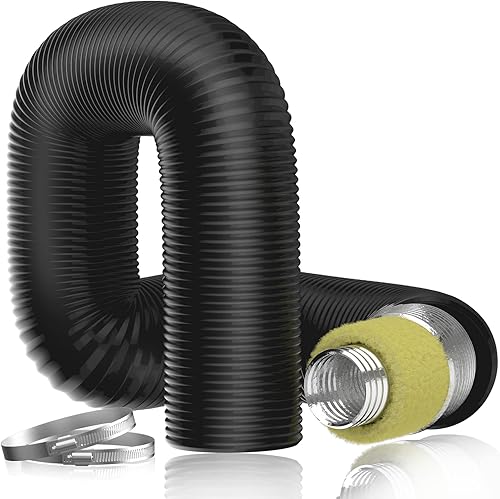 | |  |  |  | |
|---|---|---|---|---|---|---|---|---|---|---|
| Product | VEVOR R-6.0 Insulated Duct | HVAC Premium R-8.0 Duct | 6 Inch R4.2 Insulated Duct | Dundas Jafine Black Jacket | Hon&Guan Insulated Duct | 14 Inch R-6.0 Duct | 4 Inch Insulated Duct | 6 Inch Fiberglass-Free Duct | 4 Inch R6 Mobile Duct | 3 Inch Insulated Duct |
| Brand | VEVOR | HVAC Premium | muctamo | Dundas Jafine | Hon&Guan | HVAC Premium | TEAIERXY | Cuchiilo | Generic | TEAIERXY |
| Best for | Best Overall | Best for High Insulation | Best for Standard HVAC | Best for Fire Safety | Best for Noise Reduction | Best for Large Systems | Best for Dryer Venting | Best for Sensitive Users | Best for Mobile Homes | Best for Small Vents |
| The listing says | Aluminum foil and spiral steel wire Fiberglass insulation reduces noise | Aluminum housing inside and outside R-Value of 8.0 fiberglass insulation | R4.2 high-density thermal insulation Weather-resistant for indoor and outdoor | UL 181 class 1 air duct Polyester laminate and galvanized wire | Reduces noise by up to 50% Temperature range -22°F to 302°F | Aluminum housing inside and outside Air-tight core prevents fiberglass erosion | Aluminum foil, PET, steel, PVC 1mm diameter steel wire | Fiberglass-free polyester fiber core Reduces airflow noise and vibration | R6 insulation rating 8-inch diameter flexible design | Aluminum foil, PET, steel, PVC Includes two installation clamps |
| More information | Price on Amazon | Price on Amazon | Price on Amazon | Price on Amazon | Price on Amazon | Price on Amazon | Price on Amazon | Price on Amazon | Price on Amazon | Price on Amazon |
1. VEVOR Insulated Flexible Duct 4″ x 25 Ft R-6.0,Energy-Efficient 3-Layer
Best for: General HVAC and fresh air ventilation systems.
The VEVOR R-6.0 Insulated Duct uses a combination of aluminum foil and high-strength spiral steel wire. This construction is designed to maintain its shape while allowing you to bend or compress it during installation. The R-6.0 rating indicates it’s built to reduce heat loss in standard home ventilation setups.
If you’re installing this in a tight space, remember that the duct can be cut to length without compromising the interior structure. This flexibility helps keep air resistance low, which improves your system’s overall efficiency.
Because it includes two clamps, you have the basic hardware needed to secure the duct to your existing system immediately. This product isn’t intended for high-heat industrial exhaust or environments involving heavy grease. If your application involves kitchen hoods or high-temperature machinery, choose a rigid metal duct instead to avoid melting the PET film layers.
The three-layer construction—aluminum foil, PET film, and a fiberglass grid—serves a dual purpose. It creates the R-6.0 thermal barrier while simultaneously absorbing the mechanical noise of your fan or blower. Use this in central air conditioning, fresh air intake systems, or greenhouse ventilation where quiet operation is a priority.
Pros
- Includes two matching installation clamps.
- Flexible wire core resists easy deformation.
- Rated for R-6.0 thermal resistance.
- Fiberglass layer dampens operational noise.
Cons
- Not suitable for high-heat grease exhaust.
- Requires care to avoid tearing the foil.
- Limited to standard ventilation and dehumidification needs.
2. HVAC Premium 7″ Inch Flexible Aluminum Ducting Hose Insulated R-8.0
Best for: Users needing high thermal performance for heavy-duty systems.
This duct features a thick blanket of fiberglass insulation to achieve an R-8.0 value. The interior and exterior aluminum housing is designed to keep the air-tight core stable, which helps prevent fiberglass from entering the air stream during operation.
The duct is built to handle sharp bends and turns without kinking, which is useful when working in tight crawl spaces or attics. It isn’t the right choice for someone looking for a lightweight option, as the heavy-duty construction is designed specifically for demanding HVAC insulation tasks.
If your system requires high-pressure air movement, this duct’s air-tight inner core reduces pressure loss. This design choice maintains efficiency across the full 25-foot length. If you’re installing in a high-traffic area, the reinforced metallized polyester jacket provides the necessary resistance against punctures and accidental tears.
You should choose this R-8.0 model when thermal retention is your primary goal for long-run exhaust or supply lines.
However, if your installation path involves extremely tight, complex turns that require a highly pliable material, the thickness of this fiberglass-insulated pipe may prove difficult to manage. In those instances, a thinner, non-insulated duct is easier to route.
Pros
- High R-8.0 thermal insulation value.
- Reinforced jacket resists punctures and tears.
- Designed to prevent fiberglass erosion.
Cons
- Heavier than standard thin-walled ducts.
- Less flexible due to thick insulation.
3. 6 Inch 25 Feet R4.2 Insulated Flexible Duct
Best for: Year-round use in both indoor and outdoor settings.
The muctamo 6 Inch R4.2 Insulated Duct features a weather-resistant outer layer that protects the inner insulation from extreme temperatures and UV exposure. This makes it a practical choice for garages, basements, or rooftops where environmental conditions vary.
If your installation involves damp environments, this exterior layer acts as a necessary shield against moisture. You should choose this product when you need a balance of thermal efficiency and physical resilience. However, if your project demands maximum thermal retention for high-heat industrial applications, look for a higher R-value product. Using an R4.2 rating for extreme temperature differentials will result in significant energy leakage.
The duct is designed to be lightweight and easy to cut, which simplifies the installation process for standard 6-inch pipe sizes. You don’t need specialized tools to trim or shape the material to fit your specific run. If you’re working with 4-inch pipes, the same flexible material remains compatible, allowing you to standardize your inventory across different system diameters.
The thickened structure resists compression and tearing during the routing process. Follow the manufacturer’s installation guidelines for securing mounting straps to maintain the integrity of the thermal barrier. Proper installation requires only a clean cut and secure fastening to maintain the integrity of the thermal barrier.
Pros
- Suitable for indoor and outdoor use; the VEVOR R-6.0 features a 3-layer construction of aluminum foil, PET film, and fiberglass grid; the 6 Inch R4.2 includes a weather-resistant outer layer; the Hon&Guan features 4-layer protection including PVC, aluminum foil, and glass wool.
- Durable outer layer resists weather damage.
- Simple installation without specialized tools.
Cons
- Lower R-value than premium options.
- Limited to specific pipe diameters.
4. Dundas Jafine Insulated Flexible Duct with Black Jacket
Best for: Applications requiring UL 181 safety certification.
The Dundas Jafine Black Jacket is a Class 1 air duct that carries the UL mark. It features a formaldehyde-free fiberglass insulation blanket, which is a specific consideration for those concerned about indoor air quality.
The black polyethylene vapor barrier is designed to be fire retardant and heavy-duty, offering protection against common installation hazards. This product isn’t for users who need a thin, highly compact duct, as its robust construction makes it more substantial than basic unrated hoses.
If your installation involves tight, sharp corners, choose a different product. The corrosion-resistant galvanized wire helix provides strength, but it limits the bend radius compared to unreinforced plastic tubing. You should prioritize this duct when your local code mandates fire-retardant materials for heating, air conditioning, or exhaust systems.
Use this duct to replace standard galvanized pipe in general ventilation applications. If you’re struggling with thermal efficiency, the fiberglass blanket effectively reduces heat and cool loss during transit. However, don’t use this in high-heat industrial processes that exceed the temperature ratings of polyethylene.
Pros
- UL 181 Class 1 certified.
- Formaldehyde-free fiberglass insulation blanket.
- Heavy-duty fire retardant outer jacket.
Cons
- More rigid than non-certified alternatives.
- Larger profile due to thick insulation.
5. Hon&Guan 6” Insulated Flexible Duct
Best for: Reducing noise in exhaust fan systems.
The Hon&Guan Insulated Duct focuses on sound absorption, using a fluffy internal glass wool structure to decrease noise levels by up to 50%. It achieves this by allowing sound waves to escape through internal holes rather than reflecting them back into the room.
The duct features a four-layer protection design, combining PVC and double-layered aluminum foil to prevent gas leaks. This construction is durable enough for use with extractor fans, carbon filters, or as a boat blower hose. The outermost layer is specifically reinforced to resist biting from small pets, a vital safeguard if you have animals in the home.
You can rely on this duct for temperature extremes ranging from -22°F to 302°F. It excels in HVAC applications, including air circulation for grow rooms, greenhouses, and moisture exhaust for bathrooms. However, avoid using this model for kitchen grease exhaust, as the internal glass wool is designed for air and noise, not for filtering heavy cooking oils.
If you’re setting up a grow tent or a standard ventilation system, the included two clamps make installation straightforward. Ensure your run fits within the 8-foot length provided, as the insulation integrity depends on maintaining the duct’s structural form.
Pros
- Significantly reduces airflow noise.
- Four-layer construction prevents gas leaks.
- Outer shell protects against pet damage.
Cons
- Not for kitchen grease exhaust.
- Limited to specific 8-foot length requirements.
6. 14″ Inch Flexible Aluminum Ducting Hose Insulated R-6.0 Air Duct
Best for: Large-scale commercial or residential ventilation systems.
The 14 Inch R-6.0 Duct provides a large diameter for systems requiring higher air volume. Like other HVAC Premium products, it uses an air-tight inner core to keep the air clean and free of fiberglass particles while maintaining an R-6.0 thermal rating.
The jacket is reinforced with metallized polyester to resist punctures during the installation of larger duct runs. This duct isn’t for small residential bathroom fans or compact AC units, as the 14-inch diameter is far too large for standard household vents.
Pros
- Large diameter for high-volume airflow.
- Reinforced jacket resists puncture and tears.
- Air-tight core prevents fiberglass shedding.
Cons
- Not compatible with standard small vents.
- Bulky for small storage spaces.
7. 4 Inch Insulated Duct
Best for: Compact installations and dryer vent replacement.
The TEAIERXY Insulated Duct features a multi-layer construction of aluminum foil, PET, and PVC. The internal 1mm steel wire provides the structural integrity necessary to prevent deformation during tight bends. Because the hose can be stretched 360 degrees, it excels in cramped spaces where rigid piping fails.
Use this duct if you need a direct, short-run connection for HVAC systems, inline duct fans, or carbon filters. If your setup requires a precise fit, you can cut the hose to your exact length. However, don’t use this for long, complex ventilation runs. It’s strictly for an 8-foot reach. If you exceed this length, you risk airflow restriction and potential system strain.
The PVC film serves a dual purpose by providing light-proofing and noise reduction. This makes it a quiet choice for residential dryer venting. To ensure a secure connection, always utilize the provided hardware to fasten the ends. If you are fitting this to a standard residential port, the slightly wider inner diameter provides just enough clearance for a snug, airtight seal.
Pros
- Highly flexible for tight spaces.
- Includes all necessary hardware for a quick setup.
- Steel wire prevents structural deformation.
Cons
- Limited to 8-foot lengths.
- Basic insulation for small applications.
8. 6 Inch Fiberglass-Free Duct
Best for: Clean-air environments where fiberglass shedding is a concern.
The Cuchiilo 6 Inch Fiberglass-Free Duct uses a polyester fiber core instead of traditional glass wool. This design choice is aimed at users who want to avoid the potential for loose fibers entering their air stream during ventilation. By replacing glass wool with polyester, the duct minimizes debris shedding, ensuring a cleaner output for sensitive residential or office setups.
The duct is designed for quiet operation and thermal support, making it useful for small AC exhaust and dry ventilation. The insulated core absorbs airflow noise and dampens vibration from moving air. This helps maintain a comfortable temperature around the exhaust area by reducing heat transfer from the warm air passing through the hose.
If your application involves high humidity, avoid this product. It’s explicitly not for wet or greasy environments, such as kitchen grease exhaust, bathroom moisture exhaust, or standard clothes dryer exhaust. The polyester core and multi-layer construction aren’t built to handle moisture or oil buildup, which can compromise the material integrity.
The multi-layer build includes a black PVC outer layer, aluminum foil, and reinforced steel wire. This combination helps the duct maintain its shape and resist deformation during installation. If the duct must be routed through tight spaces, the steel wire provides the necessary structure to keep the airflow path stable and unobstructed.
Pros
- Fiberglass-free insulation core.
- Designed for quieter airflow operation.
- Durable multi-layer construction.
Cons
- Avoid wet or greasy environments.
- Limited to dry ventilation use.
9. 4 Inch Black R6 Mobile Home Flexible Air Duct
Best for: Heating and cooling distribution in mobile homes.
This duct provides an R6 insulation rating, which is helpful for maintaining consistent temperatures throughout a mobile home’s HVAC system. Its 25-foot length allows for long runs with fewer connections, which helps minimize potential air leaks along the path. By reducing the number of joints, you decrease the risk of pressure loss that often occurs at connection points.
The black vinyl exterior is tear-resistant, providing durability in tight crawl spaces or under-floor installations. The reinforced wire helix core prevents the duct from collapsing when routed through cramped areas. If you’re navigating around sharp corners or tight joists, this flexible design ensures the airflow remains unobstructed.
This product isn’t intended for use in high-heat industrial applications, as its design is optimized for residential HVAC temperature distribution. Always verify that your furnace output matches the R6 thermal rating to ensure peak efficiency.
Pros
- R6 rating for thermal efficiency.
- 25-foot length reduces connection points.
- Durable vinyl jacket resists tears.
- Wire helix core prevents compression.
Cons
- Not for industrial high-heat use.
- Bulky to ship and store.
10. 3 Inch Insulated Duct
Best for: Diesel heaters and very small ventilation vents.
The TEAIERXY 3 Inch Insulated Duct is a compact solution for tight ventilation needs. It uses a multi-layer construction of aluminum foil, PET, and PVC to provide basic insulation and noise reduction for small air paths. The integrated 1mm steel wire frame prevents the hose from collapsing or deforming under pressure.
It’s simple to install and can be cut to the exact length needed for your specific setup. Use the provided hardware to secure the ends to your equipment. Because of its narrow 3-inch diameter, it isn’t suitable for standard residential HVAC systems. Using this hose in those larger applications will significantly restrict the necessary airflow, potentially causing your equipment to overheat or fail.
If you’re venting a diesel heater or a small inline duct fan, this 8-foot length is ideal. However, if your system requires high-volume air movement, you must choose a wider ducting diameter to maintain efficiency.
Pros
- Perfect for small diesel heater vents.
- Easy to cut and install.
- Includes necessary mounting clamps.
- Steel wire structure prevents deformation.
Cons
- Too small for standard HVAC.
- Basic insulation capabilities.
- Restricted airflow in high-volume systems.
How to Choose in Sixty Seconds
Which R-value do I actually need for my home?
The R-value measures how well the duct resists heat flow; a higher number means better insulation. For most standard residential HVAC systems in moderate climates, an R-4.2 or R-6.0 rating is usually sufficient to prevent significant energy loss. If you live in an area with extreme temperatures or are running ducts through unconditioned spaces like a hot attic or a freezing crawl space, an R-8.0 duct is a better choice to maintain air temperature. Always check your local building codes for requirements regarding duct performance and R-values.
If your project involves small-scale exhaust—such as a portable air conditioner or a dry ventilation line—you can often opt for specialized alternatives like fiberglass-free polyester cores. These are designed to minimize loose fiber shedding into the air stream, which is a common concern in smaller, enclosed spaces. However, never use these fiber-free options for wet or oily environments like kitchens or bathrooms, as they lack the moisture resistance of standard foil-and-glass-wool construction.
Does the jacket material really matter for safety?
Yes, the jacket is your first line of defense against punctures, moisture, and fire. If you’re installing ducts in an area with potential for physical damage, such as a garage or a basement, look for a reinforced metallized polyester or heavy-duty vinyl jacket. These materials are built to resist tears and punctures during installation. If your duct passes through a space where fire safety is a concern, prioritize products with a UL 181 listing, which confirms the duct has passed strict fire and air-leakage testing. Avoid using unrated ducts in any area where a fire could easily spread or where the duct might be exposed to high heat sources.
Check the outer layer for specific environmental protections before you buy. If you’re installing in a space accessible to pets or wildlife, look for a multi-layer design that includes a durable PVC or reinforced outer barrier.
How do I avoid common installation mistakes?
The most common mistake is over-stretching or crushing the duct, which increases air resistance and reduces system efficiency. Always measure your run accurately and cut the duct to the proper length rather than forcing a long, coiled duct into a small space. Ensure that all connections are airtight using the included clamps or approved duct tape, as small leaks can lead to energy waste. Finally, avoid sharp, tight-angle bends whenever possible; use gentle curves to maintain smooth airflow. If you must turn a corner, ensure the internal helix core isn’t kinking, as a kinked duct will struggle to move air properly.
Confirm your vent diameter—3, 4, 6, 7, 10, or 14 inches—before purchasing, as these ducts cannot be adjusted once cut. Using the wrong size creates backpressure, straining your motor and reducing equipment lifespan. Check your HVAC manual to verify the required diameter and R-value for your next installation.