
Choosing a smart AC controller comes down to how much you want to automate your home. While all these hubs use infrared signals to mimic your existing remote, they differ by their extra sensors, smart home protocols like Matter, and whether they can control radio frequency devices.
Best overall: SwitchBot Hub Mini is a compact, reliable gateway that works with major voice assistants and offers an easy “smart learning” mode to mimic your existing AC remote in seconds.
Best for mini-splits: Sensibo Sky is designed specifically for ductless systems, offering advanced climate react features and geofencing to ensure your home stays comfortable without wasting energy on empty rooms.
Best for advanced automation: Aqara Hub M3 acts as a powerful bridge for Matter and Thread devices, providing local control and a 360-degree IR blaster that can even detect if you manually used your traditional remote.
The rest of this guide is for homeowners looking to modernize their cooling systems with simple, voice-controlled, or automated solutions.
How We Picked
We compared 48 different Amazon listings to find hubs that provide reliable infrared control for air conditioners. Each selected product had to clearly state its compatibility with 2.4GHz Wi-Fi, voice assistant support, and specific IR learning capabilities. We excluded any devices that didn’t provide clear documentation on their setup process or failed to list essential features like geofencing or scheduling. Our selections prioritize products that offer stable connectivity and manufacturer-backed support, ensuring you can manage your climate settings with confidence.
All 10 products side by side — scroll sideways to see every column.
| Top Pick | Best for Mini-Splits | Best for Sensor Data | Best for RF Control | Best for LED Display | Best for Universal IR | Best for Security | Best for Local Control | |||
| Preview |  |  |  |  |  | 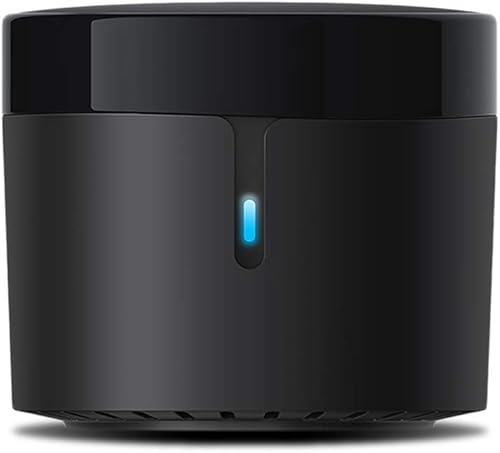 |  |  |  |  |
|---|---|---|---|---|---|---|---|---|---|---|
| Product | SwitchBot Hub Mini | Sensibo Sky | SwitchBot Hub 2 | Breez Lite | BroadLink RM4 Pro | BroadLink RM4 Mini | WOOX Smart Controller | MOES WiFi Remote | Tapo Smart Hub | Aqara Hub M3 |
| Brand | SwitchBot | Sensibo | SwitchBot | Cielo Breez | Broadlink | Broadlink | WOOX | MOES | Tapo | Aqara |
| Best for | Best Overall | Best for Mini-Splits | Best for Sensor Data | — | Best for RF Control | — | Best for LED Display | Best for Universal IR | Best for Security | Best for Local Control |
| The listing says | Setup via SwitchBot App using 2.4G Wi-Fi Control infrared appliances from one app | Smart control for remote-operated AC units Connects to Wi-Fi, Alexa, Google, and Siri | Includes Swiss-made sensor for temperature and humidity Consolidates infrared remotes for voice control | Control ductless AC from anywhere via app Compatible with 20,000+ AC and heat pump models | Supports RF 433MHz and 50,000+ IR devices Configured via BroadLink app | Supports 50,000+ IR controlled devices Includes remote library and manual learning | Smart control for mini-split and portable AC Compatible with 300+ brands and 10,000+ devices | Requires 2.4G Wi-Fi connection Controls infrared devices like AC and TVs | Matter-certified hub for 8,000+ IR brands Supports 18 appliance types | Supports Aqara Zigbee, Thread, and Matter Prioritizes local control and automation |
| More information | Price on Amazon | Price on Amazon | Price on Amazon | Price on Amazon | Price on Amazon | Price on Amazon | Price on Amazon | Price on Amazon | Price on Amazon | Price on Amazon |
1. SwitchBot Hub Mini Smart Remote
Best for: Users who want a simple, straightforward smart home gateway.
The SwitchBot Hub Mini acts as a central bridge for the entire SwitchBot ecosystem, turning your dumb appliances into smart ones. It uses a “smart learning” mode to copy your existing remote signals within five seconds, making it very easy to integrate your AC. Its USB-powered, portable design allows you to place it almost anywhere near your devices.
If you have a dual-band router, you must connect the hub to the 2.4GHz network, as it can’t link to 5GHz bands. Check your router settings before beginning the setup process to avoid connection failures.
For optimal performance, place the hub in a clear line of sight of your infrared appliances. Dense construction materials or metal objects placed between the hub and your devices will block the signal. If your remote commands aren’t registering, move the hub to a more open position.
This hub is ideal for those starting their smart home journey who want voice control through Alexa, Siri, or Google Home. It isn’t for users who need to control radio frequency devices, as it’s strictly limited to infrared signals.
Pros
- Simple app setup process.
- Compact and highly portable design.
- Broad voice assistant compatibility.
Cons
- Requires 2.4GHz Wi-Fi network.
- Needs clear line of sight.
2. Sensibo Sky
Best for: Owners of mini-split or ductless air conditioner systems.
Sensibo Sky turns any remote-controlled AC into a smart device. It features “Climate React,” which uses temperature and humidity sensors to maintain your preferred comfort level automatically. By using geofencing, it ensures your AC runs only when you’re nearby, helping to cut cooling bills by up to 40%.
This unit is perfect for those who want a “set it and forget it” climate solution. If you have a window, portable, or mini-split system, this 3.2” x 2.2” x 0.8” device integrates with your existing remote. You can manage settings via phone or desktop apps, or through voice commands via Google, Alexa, and Siri.
If your AC lacks a remote control, this unit won’t work. It’s also not for those looking for a universal hub for TVs or other non-AC appliances, as its features are strictly for cooling systems. Ensure your home has a stable WiFi connection, as the device doesn’t support Bluetooth.
Pros
- Excellent geofencing and 7-day scheduling features.
- Dedicated to mini-split, ductless, and portable units.
- Includes helpful Climate React settings.
Cons
- Doesn’t support Bluetooth connectivity.
- Limited to AC control.
3. SwitchBot Hub 2 (2nd Gen)
Best for: Users seeking a high-end hub with built-in sensors.
The SwitchBot Hub 2 is a significant step up, featuring a built-in Swiss-made chip to monitor temperature and humidity with high precision. It includes a light sensor that adjusts the display brightness automatically based on your room’s environment. Because it supports Matter, it provides better integration with various smart home ecosystems like Apple Home.
This hub is great for people who want to trigger scenes based on environmental data, such as turning on the AC when the room hits a certain temperature. It isn’t for those who prefer a basic, low-profile remote blaster, as this unit is larger and more complex.
Pros
- Includes accurate temperature and humidity sensors.
- Supports Matter for better connectivity.
- Features useful physical smart buttons.
Cons
- Larger footprint than the Mini.
- Requires a standard-frequency Wi-Fi connection only.
4. Breez Lite
Best for: Users wanting a dedicated AC controller.
Breez Lite is a sleek device that makes any ductless mini-split or window unit smart. It features an automatic remote detection system that makes configuration very quick and simple. You can create HVAC zones by adding multiple units, which is great for managing the temperature in different parts of a large house.
Place the controller within 6 to 12 feet of your unit to ensure reliable performance. If you struggle to connect, check your line of sight, as the device must see the AC to send commands.
It isn’t for users who need to control non-HVAC appliances, as it focuses strictly on cooling and heating equipment.
Pros
- Supports 20,000+ AC and heat pump models.
- No monthly subscription fees required.
- Includes dedicated customer support.
Cons
- Needs line of sight to AC.
- Limited to older, broader-range network bands.
5. BroadLink RM4 pro IR and RF Universal Remote
Best for: Users needing both IR and RF signal control.
The BroadLink RM4 Pro is unique because it supports both infrared and radio frequency (433MHz) signals. This allows you to control not just your AC and TV, but also motorized curtains, light switches, and other RF-based home devices. It integrates well with IFTTT and voice assistants for complex automation.
If your home network uses a 5GHz band, you must switch to a 2.4GHz connection to configure the device in the app. The hub will fail to connect otherwise.
This is the best choice if you have a mix of older IR remotes and newer RF home gear. It isn’t for those who only need basic IR control, as the RF setup can be more involved than a standard IR blaster. If you want to monitor your environment, you can purchase an external sensor cable to track temperature and humidity directly in the app.
Pros
- Controls both IR and RF devices.
- Large library of supported devices.
- Integrates with most voice assistants.
Cons
- RF control requires careful configuration.
- Doesn’t support Bluetooth.
- Requires a standard-frequency Wi-Fi connection.
6. BroadLink RM4 Mini IR Universal Remote Control
Best for: Minimalists who want a hidden IR blaster.
The BroadLink RM4 Mini is a compact IR blaster designed to disappear into your room’s decor. It accesses a massive cloud-based library of over 50,000 remote templates, making it likely that your AC, fan, or DVD player is already supported. If your specific model is missing, use the manual learning function to teach the hub commands from your original remote.
This device is ideal for smartening up appliances without adding bulky tech to your shelf. However, it requires a clear line-of-sight to function. If you place the hub behind a cabinet door or inside a drawer, it will fail to trigger your devices. Always verify that your appliance uses infrared signals before purchasing, as this hub doesn’t support Bluetooth, Zigbee, or RF-based remotes.
If you struggle with connectivity, confirm your network is running on 2.4 GHz Wi-Fi, as the device is incompatible with 5 GHz bands. While the cloud library updates automatically, you can always program custom buttons manually if data is unavailable.
Pros
- Very small and non-intrusive.
- Extensive library of remote templates.
- Simple manual learning process.
Cons
- No RF signal support.
- IR requires direct line of sight.
7. WOOX Smart AC Controller
Best for: Buyers who want an all-in-one display and controller.
The WOOX Smart Controller features an LED screen that shows you the current room temperature and humidity at a glance. It’s designed for easy DIY setup, allowing you to pair it over Bluetooth and Wi-Fi in just a few minutes. It’s a great way to keep tabs on your home climate without always opening your phone.
This controller is perfect for users who want immediate visual feedback on their room conditions. It isn’t for those with central HVAC or ducted systems, as it’s strictly designed for ductless or portable units. If your specific model isn’t among the 10,000 supported, use the IR learning feature to copy your original remote in about 30 seconds.
Ensure the device has a direct line-of-sight to your AC receiver, or the signals won’t reach. You must use a 2.4GHz network, as 5GHz connections aren’t supported. If you struggle to connect, verify your router settings before beginning the pairing process.
Pros
- Built-in LED temperature and humidity display.
- Fast Bluetooth and Wi-Fi pairing.
- Includes a 7-day scheduling feature.
Cons
- Not for central HVAC systems.
- Requires a standard-frequency Wi-Fi connection.
8. MOES WiFi Smart IR Remote Controller Smart Home Infrared Universal
Best for: Users who need a reliable universal IR blaster.
The MOES WiFi Remote is a solid, no-nonsense IR blaster that works with a wide variety of infrared appliances. It uses the popular Smart Life app, which is compatible with many other smart home brands. The DIY learning function is very helpful if your specific AC brand isn’t found in the initial search.
This device is best for someone who wants a simple, universal solution for their home. It isn’t for users who need advanced automation features like those found in sensor-rich hubs.
Pros
- Compatible with the Smart Life app.
- Easy DIY learning for custom remotes.
- Simple USB power connection.
Cons
- No RF support.
- Limited to single-room use.
9. Tapo Smart IR & IoT Hub w/ Chime
Best for: Smart home users who value security and Matter support.
The Tapo Smart Hub is a Matter-certified device that combines an IR universal remote with an IoT hub and a loud alarm. It supports a massive range of appliances, from AC units to robot vacuums and humidifiers. TP-Link emphasizes security, making this a good pick for those concerned about their smart home data.
If you have legacy electronics that rely on infrared, this hub replaces multiple remotes by consolidating 18 different appliance types. It works best when placed in a central location within clear line-of-sight of your IR devices. Avoid tucking the hub inside a cabinet, as the infrared signal can’t penetrate solid walls or closed doors.
This hub is ideal for users who want to consolidate all their infrared remotes and IoT devices into one secure system. It isn’t for those who want a simple, singular AC controller, as this hub is designed for broader smart home management.
Pros
- Matter-certified for wide compatibility.
- Includes a 93dB alarm.
- Strong focus on cybersecurity.
Cons
- Requires a standard-frequency Wi-Fi connection.
- More complex than basic blasters.
10. Aqara Smart Home Hub M3
Best for: Enthusiasts building a complex, local-first smart home.
The Aqara Hub M3 is a premium device that serves as a multi-protocol hub for Zigbee, Thread, and Matter. Its 360-degree IR blaster can even detect when you use a physical remote, allowing it to sync the state of your AC with your app. It offers local automation, meaning your scenes will continue to work even if your internet goes down.
If you have a large setup, note that it supports up to 127 Zigbee and 127 Thread devices. For the best performance, place the unit between 6 and 19 feet from your router. If your automations rely on cloud-based notifications, keep in mind that those specific alerts still require an active internet connection.
This hub is perfect for those who want complete control over their smart home ecosystem. It isn’t for casual users, as it’s a more advanced piece of equipment that may be overkill for a simple one-room AC setup.
Pros
- Advanced local-first automation.
- Supports Zigbee, Thread, and Matter.
- 360-degree IR blaster with feedback.
Cons
- High setup complexity.
- Power adapter not included.
How to Choose the Best Bluetooth Smart AC Hub
Which IR hub feature matters most?
The most important feature is the ability to learn signals. While most hubs have a library of thousands of pre-set remotes, you’ll eventually find an appliance that isn’t listed. A hub with a robust “DIY” or “Smart Learning” mode ensures you can manually teach it the signals from your original remote.
You should also check if you need RF control. If you have older ceiling fans or motorized shades that use radio frequencies, you must select a hub that explicitly supports RF, as standard IR blasters won’t work with them. Mistaking an IR-only device for an RF-capable one is a common error; it leaves you unable to control your motorized shades, rendering the purchase useless for those specific appliances.
Do I need a hub with built-in sensors?
Built-in sensors for temperature and humidity are highly useful if you want to automate your AC based on the environment rather than just a schedule. A hub like the SwitchBot Hub 2 or WOOX Smart Controller can turn your AC on automatically when the room gets too hot or humid.
If you only want to turn your AC on at a specific time, you don’t need these sensors. However, having them allows for “smart triggers,” which are more efficient because they respond to actual room conditions.
What should I confirm before ordering?
First, confirm your Wi-Fi network frequency. Almost all these smart controllers require a 2.4GHz network and won’t connect to 5GHz bands. If your home uses a combined network, you may need to temporarily disable the 5GHz band during setup.
Second, verify the line-of-sight requirement. Infrared signals can’t travel through walls, so your hub must have a clear path to the AC unit’s receiver. If you have multiple rooms, you’ll need a separate hub for each one. Finally, check if your specific AC brand is compatible with the app associated with the hub, as this will save you significant time during the initial configuration process. If you find your device isn’t listed in the cloud library, don’t panic; simply use the manual learning mode to copy the remote buttons one by one.
Related guides
- 10 Best Smart AC Controller with WiFi Options for Your Home
- 7 Best Smart Window AC Units for Ultimate Comfort and Efficiency
Frequently Asked Questions
Does my AC need to be “smart” to work with these hubs?
No, your air conditioner does not need to be smart. These controllers mimic the infrared signals from your original remote to bridge the gap. As long as your AC unit uses an IR remote, these hubs can translate smartphone or voice commands into the signals your unit understands.
What happens if my Wi-Fi goes down?
If your Wi-Fi connection drops, you lose app and voice control, but your original physical remote will still work. The hub remains in its last state and reconnects automatically once service returns. Some advanced models, like the Aqara Hub M3, can even maintain local automations during an outage.
Is the simplest hub on the list enough for me?
A simple hub is sufficient for most users to manage daily AC operations. If you only need basic scheduling or remote on/off control, you do not require advanced features like Matter support or RF control. You only need complex options if you are building a large, integrated smart home ecosystem.
What is the most common mistake when setting these up?
Most smart AC controllers require a 2.4GHz Wi-Fi network for setup, so ensure your phone is connected to that band. Additionally, place the hub in the same room as the AC with a clear line of sight. Because infrared signals are light-based, they cannot travel through walls or around corners.
Closing
Selecting the right smart AC controller depends on your existing setup and the level of automation you desire. For most users, the SwitchBot Hub Mini provides a balance of simplicity and functionality. If you manage a mini-split system and require high precision, the Sensibo Sky is a top-tier choice for its climate-focused features.
Before you buy, confirm your Wi-Fi network. Almost all these devices require a 2.4GHz connection; they will fail to pair if you attempt to use a 5GHz signal.
Placement is critical. Infrared signals can’t penetrate walls or solid objects. You must maintain a clear line of sight between the hub and your appliance. If your chosen model doesn’t recognize your specific remote, use the “smart learning” or “DIY” mode to manually copy the original button signals. This step typically takes under a minute but ensures compatibility with older or niche hardware.