
Choosing the right mini split condensate pump depends on your specific installation needs, such as the available space for the unit and the vertical lift required to move water away from your system. These pumps differ primarily in their sensor technology, lift capacity, and the inclusion of mounting accessories for a cleaner look.
Best overall: Aquastrong Mini Split Pump, which offers a robust 33-foot lift and an automatic safety switch to protect your HVAC equipment from potential water overflow issues. Highest lift capacity: Ultra Quiet Condensate Pump, which provides an impressive 65-foot discharge head and uses advanced capacitive sensor technology to minimize the risk of mechanical failure in moving parts. Best integrated kit: Little Giant EC-1K-DV, which includes a comprehensive line set cover and mounting hardware to ensure a professional, finished appearance for external pump installations.
This guide is for homeowners and installers seeking reliable condensate removal for their ductless systems.
How We Picked
We compared 16 different Amazon listings to identify the most reliable options for residential and light commercial HVAC condensate removal. To earn a place in this review, each product had to clearly state its maximum flow rate, lift capacity, and safety features like overflow switches.
All 10 products side by side — scroll sideways to see every column.
| Top Pick | Best for Bedrooms | Also Great | Best for Dirty Water | Best for Tight Spaces | Best for Ductless Systems | |||||
| Preview |  |  |  | 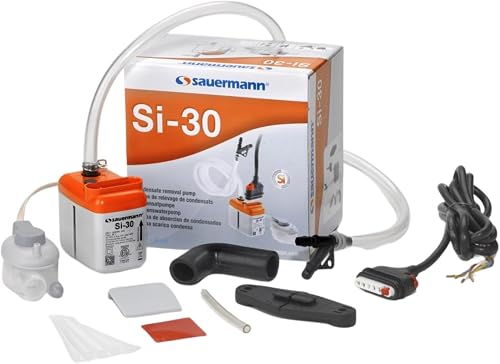 |  |  |  |  |  |  |
|---|---|---|---|---|---|---|---|---|---|---|
| Product | Aquastrong Mini Split Pump | Ultra Quiet Condensate Pump | Aspen Silent+ Mini Aqua | Sauermann Si-30 Pump | Rectorseal Ghost External Plus | Compact Mini Split Pump | P16 Mini Split Pump | Mini Split Pump | Auto-Adjust Flow Pump | Little Giant EC-1K-DV |
| Brand | AQUASTRONG | GuardFlow | Aspen Pumps | Sauermann | Rectorseal | GuardFlow | WIPCOOL | Cleartide | heculy | Little Giant |
| Best for | Best Overall | Best for Bedrooms | Also Great | Best for Dirty Water | — | Best for Tight Spaces | Best for Ductless Systems | — | — | — |
| The listing says | 9.6 GPH flow and 33ft max head Thermally protected motor with 20 dB operation | 16dB operation with soft-start technology Capacitive sensor replaces traditional float | 9.25 GPH flow at 16 dB(A) Precision capacitance sensor for water detection | 5 GPH flow and 33 ft max lift 20 dBA noise level with anti-vibration bracket | Variable-flow technology reduces noise Low profile design for tight spaces | Compatible with various HVAC systems Vibration-dampening design for quiet operation | Designed for fan coil and ducted systems 4.2 GPH flow and 33 ft max head | 10.6 GPH flow and 33ft max head Separated reservoir and motor design | Designed for mini split condensate removal Compact space-saving build | Supports 110 to 240 volt operation Includes hose adapters and mounting bracket |
| More information | Check Price on Amazon | Check Price on Amazon | Check Price on Amazon | Check Price on Amazon | Check Price on Amazon | Check Price on Amazon | Check Price on Amazon | Check Price on Amazon | Check Price on Amazon | Check Price on Amazon |
1. Aquastrong Mini Split HVAC Condensate Pump
Best for: General residential mini split installations.
This pump features a thermally protected motor designed for quick condensate drainage in various HVAC units. Its design focuses on ease of use, with a visible tank and filter that you can remove for cleaning every six months to prevent clogs. The inclusion of an automatic safety switch allows you to wire the pump directly to your AC unit or an alarm, ensuring the system shuts down if the reservoir ever overflows.
The unit installs flexibly in line set covers or wall cassettes using the provided anti-vibration strips. Because it uses a hall switch for operation, it’s built for long-term reliability in daily use. This model isn’t suited for high-pressure industrial applications that exceed its 9.6 GPH flow limit.
Pros
- Includes reliable automatic safety switch.
- Easy to clean removable reservoir.
- Simple installation in tight spaces.
Cons
- Requires regular six-month maintenance.
- Not for industrial high-flow needs.
2. Ultra Quiet Condensate Pump
Best for: Bedrooms and noise-sensitive home offices.
It replaces traditional float switches with advanced capacitive sensor technology, which removes moving parts that can stick.
With a 65-foot discharge head, this unit is capable of pushing water through long, vertical drain lines where gravity can’t assist. It’s compatible with a wide range of systems from 6,000 to 157,000 BTU/h, covering most residential and light commercial needs. The listing doesn’t mention specific tool requirements, though it notes that professional installation is recommended for best performance.
Pros
- Exceptionally quiet 16 dB operation.
- Durable solid-state capacitive sensor.
- High 65-foot vertical lift capacity.
Cons
- Professional installation is recommended.
- Complex setup for beginners.
3. Aspen Silent+ Mini Aqua Gen 5 Condensate Pump
Best for: Systems requiring high-efficiency variable speed control.
The Aspen Silent+ Mini Aqua is notable for its intelligent variable speed technology, which adjusts output based on your system’s real-time demand. This feature is designed to reduce mechanical wear and extend the lifespan of the pump compared to standard single-speed models. It operates at 16 dB, keeping noise levels very low during operation.
The slim, plug-and-play design makes it easy to fit into tight trunking or inside the mini split unit itself. While it’s built for high-performance drainage up to 136,000 BTU/h, it may be overkill for very small or basic residential wall-mounted units that don’t require such advanced flow management.
If your installation requires replacing an older model, this Gen 5 pump delivers nearly three times the flow rate at 9.25 GPH. Use this unit when you need reliable water detection provided by the precision capacitance sensor. If you’re installing in a bedroom or quiet office, the 16 dB rating ensures the pump remains virtually silent. Avoid this model if your system capacity is under 136,000 BTU/h and you prefer a simpler, fixed-speed mechanical pump.
Pros
- Advanced variable speed motor control.
- Extremely slim profile for tight fits.
- Quiet 16 dB operation.
Cons
- Advanced features may exceed basic needs.
- Requires precise placement in trunking.
4. Sauermann Si-30 Mini Condensate Removal Pump
Best for: Systems prone to dirty condensate water.
The Sauermann Si-30 uses patented piston technology to handle the small particles and sludge that frequently clog standard centrifugal pumps. If your system runs in an environment where dust or biological growth is common, this design prevents the premature failures that plague other models.
The unit includes a pre-fitted Drain Safe Device to retain prime, which extends the operational life of the pump. Its sound level is independently tested to stay at 20 dBA regardless of condensate volume. Use the included anti-vibration bracket to mount the pump directly to walls, ceilings, or pipework to stop noise transfer into the building structure.
Check your power supply before purchase, as this unit requires a 230V connection. While the 5 GPH flow rate is lower than some competitors, it supports air conditioners up to 5.6 tons. If you see an overflow risk, the integrated NC safety switch will automatically shut down the AC unit to prevent water damage.
Pros
- Patented piston handles dirty water.
- Reliable anti-vibration mounting bracket.
- Proven 20 dBA sound performance.
Cons
- Lower 5 GPH max flow rate.
- Fixed 230V power requirement.
5. Rectorseal Ghost External Plus Mini Split Condensate Pump Kit 100-240V
Best for: External mounting under mini split units.
The Rectorseal Ghost External Plus is designed specifically for external installation, fitting neatly under wall-mounted units or above doors. Its adaptive performance technology automatically adjusts the pump speed based on the amount of condensate present, which helps keep operation smooth and quiet. The reversible mounting option allows for either left or right-side installation, providing flexibility for different wall layouts.
It includes integrated safety contacts that protect your HVAC equipment by shutting it down if water levels rise too high. You should choose this model if your installation space is tight and requires a low-profile footprint. If you’re instead performing an in-ceiling installation, this unit isn’t the correct choice, as it lacks the necessary housing for hidden, internal mounting.
Many installers mistakenly attempt to force this unit into confined ceiling cavities, which leads to overheating and premature failure. Always verify your mounting location before purchase. If the unit must be hidden from view, look for a pump specifically rated for internal, concealed environments.
Pros
- Clean, low-profile external aesthetic.
- Adaptive flow control technology.
- Flexible left or right mounting.
Cons
- Designed specifically for external use.
- Not for in-ceiling mounting.
6. Compact Mini Split Pump
Best for: Tight HVAC installation spaces.
This pump features a compact, split-style design measuring 164 × 70 × 106 mm, making it ideal for restricted spaces near indoor units, attics, or garages. It uses a fully potted motor to resist moisture and vibration, which contributes to its quiet operation at less than 20 dB. The automatic float switch ensures the pump only runs when needed, helping prevent overflow.
It offers a high 65.6-foot discharge head, matching the performance of much larger units. If you notice the pump failing to cycle, check the reservoir for debris. Because it relies on a traditional float switch, it requires occasional cleaning to ensure the float remains free of sludge and continues to move smoothly.
To protect your property, wire the 3A normally closed safety switch into your system. If a blockage occurs and water levels rise abnormally, this circuit will trigger an automatic AC shutdown to prevent leaks.
Pros
- Very compact footprint for tight areas.
- High 65.6-foot discharge head.
- Moisture-resistant potted motor.
Cons
- Traditional float requires occasional cleaning.
- Not the smallest unit available.
7. P16 Mini Split HVAC Condensate Pump
Best for: Concealed fan coil and ducted systems.
The WIPCOOL P16 is engineered for tight ceiling spaces where fan coil units reside. It operates at less than 19 dB, which is essential for maintaining a quiet indoor environment when the pump is tucked away in a bedroom or office. The probe-based water level detection provides a reliable way to trigger the NC safety shutoff output if an overflow is imminent.
To ensure this protection works, you must wire the NC safety output directly into your HVAC control system. If you skip this connection, the pump will continue to run during a blockage, potentially leading to water damage in your ceiling.
This compact kit is designed for standard-duty installations like dehumidifiers or residential central air. It isn’t intended for high-capacity commercial cooling systems, as the 4.2 GPH flow rate will be overwhelmed by heavy condensate volume.
For consistent performance, clean the pump tank, float, and filter basket every 3 to 6 months. Neglecting this maintenance leads to debris buildup, which causes the float to stick and the pump to fail. Perform this cleaning during seasonal transitions to keep drainage reliable year-round.
8. Mini Split Pump
Best for: Simple, all-in-one installation.
The Cleartide Mini Split Pump is built for quick setup and includes a complete accessory kit to get your system running immediately. Its design separates the reservoir and motor, connected by a signal wire, which helps save space in crowded ceiling or refrigeration units. It features a reliable hall switch for automatic operation and includes a safety switch wire for system shutdown in case of overflow.
If you’re installing this in a tight area like a line set cover or wall cassette, use the included anti-vibration velcro strips to secure the components. This prevents rattling and ensures the pump remains stable during high-flow cycles.
The unit operates at 23 dB and is capable of draining 19 ml of water per cycle with only 5 mm of water remaining in the tank. It provides a maximum flow of 10.6 GPH and a maximum head of 33 feet. While quiet, if you’re placing the unit directly inside a bedroom, ensure the reservoir is accessible for maintenance. You must periodically remove the tank and filter for cleaning to prevent clogs that trigger the overflow safety switch.
Pros
- Complete kit with all accessories.
- Space-saving separated motor design.
- Reliable hall switch operation.
Cons
- Requires regular filter maintenance.
- Standard performance specs.
9. Auto-Adjust Flow Pump
Best for: Users prioritizing soft-start technology.
The heculy pump focuses on “Soft Start” technology to ensure the motor ramps up gently, which helps minimize vibration and noise during startup. This compact unit is designed to fit easily into tight installation areas near mini split systems. It handles continuous drainage to prevent water buildup in the unit’s pan.
If your priority is noise reduction in a bedroom or office, this soft-start feature is your primary benefit. If you require advanced status monitoring, look elsewhere, as this model lacks the diagnostic LEDs found in premium units. You should choose this pump when space is the primary constraint and you need a simple, reliable solution for standard condensate removal.
The installation process is straightforward, requiring minimal effort to connect to standard mini split setups. This pump is a no-frills option that does not offer universal voltage compatibility. Rely on this unit for consistent performance when you need to prevent water damage without complex setup requirements.
Pros
- Soft-start motor prevents startup vibration.
- Compact, space-saving design.
- Straightforward installation process.
Cons
- Lacks advanced diagnostic LED lights.
- Basic feature set compared to others.
10. Little Giant EC-1K-DV 110-240V
Best for: A finished, professional look.
The Little Giant EC-1K-DV serves as both a condensate pump and a decorative line set cover, concealing unsightly plumbing for a clean appearance. It accommodates 3/8-inch or 5/8-inch line sets and includes a trim kit to match your wall-mounted system. With a 21 dB(A) rating and an included noise reducer, it operates quietly in residential spaces.
The unit supports 110-240V input, offering versatility across different electrical environments. While powerful, it requires hardwiring to a power source rather than a simple plug-in connection. If your installation requires only the pump mechanism without external trunking, this kit is likely overkill. Conversely, if you need to hide exposed lines while managing condensate, the included 31.5-inch straight cover and 90-degree elbow provide the necessary hardware for a finished installation.
To determine if this fits your setup, check your specific drain hose diameter; the kit includes multi-size adapters to ensure compatibility with all popular connections. Remember that the pump is rated for a 3-foot suction lift and a 33-foot shut-off height. Exceeding these limits will cause the system to fail.
Pros
- Includes complete line set cover kit.
- Provides a finished, professional aesthetic.
- Universal 110-240V power compatibility.
Cons
- Larger kit footprint.
- Not for hidden installations.
How to Choose in Sixty Seconds
Which pump technology lasts the longest?
Mechanical floats have moving parts that can become stuck due to dirt, slime, or debris buildup in the reservoir.
Does the vertical lift capacity really matter?
Vertical lift capacity is one of the most critical specs to confirm before buying. If your AC unit is in a basement or a room where the drain line must go up through a ceiling or wall to reach an exit point, you must ensure the pump’s “max head” exceeds that height. A pump capable of handling standard residential vertical distances is usually sufficient, but some units offer significantly higher lift for more demanding setups. Always measure the total vertical distance from the pump to the highest point of the drain line. Choosing a pump that’s too weak for your specific height requirements will result in water backing up and potential overflow.
Should I prioritize a quiet decibel rating?
If the mini split is located in a bedroom, home office, or living room, the decibel rating is a priority. Most modern mini split pumps are engineered for quiet operation, typically ranging between 16 dB and 23 dB. A difference of a few decibels may seem small on paper, but in a quiet bedroom at night, it can be noticeable. Look for features like “soft-start” technology, which prevents the motor from making a sudden noise when it kicks on, and anti-vibration brackets, which stop the pump from rattling against the wall or ceiling. If the unit is mounted in an attic or utility room, the sound rating is less critical than the flow and lift specifications.
Related guides
- How Many Btu is a 1 Ton Mini Split? Choosing the Cooling Capacity
- Best Mini Split Ductless AC Accessories for Optimal Performance
- 10 Best Clear AC Condensate Drain Tubing Picks for Your Unit
Frequently Asked Questions
What does the safety overflow switch actually do?
The safety overflow switch shuts down your mini split system if the pump fails to remove water fast enough. It sends a signal to the control board to stop condensate production when water reaches a critical level. Always confirm your system has an input for an external safety switch before installation.
How often do I need to clean the pump?
Manufacturers recommend cleaning the pump reservoir, float, and filter at least twice a year. Regular cleaning prevents the accumulation of dust and algae that leads to clogs. If your specific model lists a different maintenance interval, follow those instructions strictly to maintain the pump’s effectiveness.
Is the simplest pump on the list enough for my needs?
Basic pumps are often adequate for standard residential wall-mounted units. These models provide reliable condensate removal and safety switches without the complexity of variable speed motors. If the pump meets your vertical lift and flow rate requirements, a simpler model will perform the job effectively.
What goes wrong first in these pumps?
The most common point of failure in mini split condensate pumps is the buildup of sludge or debris. This accumulation prevents float switches from activating or coats sensor surfaces, affecting accuracy. Regular maintenance, including flushing drain lines and cleaning the reservoir, is the primary way to prevent these issues.
Closing
The Aquastrong Mini Split Pump remains the top choice for most users due to its balanced performance, reliable hall switch technology, and easy-to-clean reservoir design. For those who need a professional, finished aesthetic for external installations, the Little Giant EC-1K-DV is the most practical choice, as it combines the pump with a complete line set cover kit.
Before ordering, double-check your total vertical lift requirements. Some models, like the GuardFlow, offer extensive vertical lift, while others are limited to more modest heights. Ensure the pump’s voltage is compatible with your home’s electrical setup, as some units require specific 115V or 230V connections, while others support universal 100–240V power.
If you’re unsure about the wiring, particularly for the safety overflow switch, consult a licensed HVAC technician. Proper installation of this switch is vital to protect your home against leaks. Finally, remember to clean the reservoir, float, and filter on a semi-annual basis to prevent clogging.