
You can determine the right gap filler by evaluating your window type and the size of the opening. These products range from adhesive foam strips for narrow gaps to structured panels for larger spaces. The best choice balances your insulation needs with the ease of installation.
Best overall: Window AC Foam Panels, which offer a universal fit for most window units and provide a solid, thick barrier to keep out dust and drafts. Best for simple gaps: MD Building Weatherseal, a reliable choice for those needing a quick, no-fuss solution to seal small gaps around their unit. Best for custom fit: Flamorrow Insulated Foam Panels, which allow for easy trimming and combination to fit specific window vent kits perfectly.
This guide is for anyone looking to improve home comfort and energy efficiency by sealing gaps around their window air conditioner.
How We Picked
All 10 products side by side — scroll sideways to see every column.
| Top Pick | Best for Extreme Temps | Best for Weatherstripping | Best for Gap Sealing | Best for Full Insulation | Best for Noise Reduction | Best for U-Shaped Units | Best for Portable Units | Best for Structured Look | ||
| Preview |  |  |  | 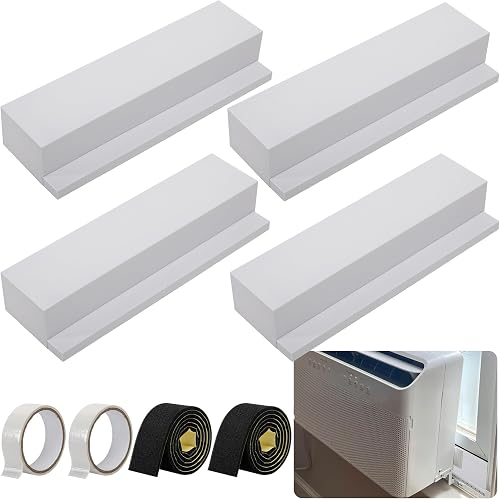 |  |  |  |  |  |  |
|---|---|---|---|---|---|---|---|---|---|---|
| Product | Window AC Foam Panels | Yotache AC Window Seal | Frost King AC43H Weatherseal | Moonoom AC Foam Blocks | LBG Products Side Panels | Frost King AC41WA Seal | U-Shape AC Foam Block | Flamorrow Insulated Foam Panels | MD Building Weatherseal | AC Side Panels Aluminum |
| Brand | LBG Products | yotache | Thermwell | moonoom | LBG Products | Frost King | NEAGLORY | Flamorrow | M-D Building Products | Babeezy |
| Best for | Top Pick | Best for Extreme Temps | Best for Weatherstripping | Best for Gap Sealing | Best for Full Insulation | Best for Noise Reduction | Best for U-Shaped Units | Best for Portable Units | — | Best for Structured Look |
| The listing says | Fits window units 5000 – 22000 btu Blocks dust, pollen, insects, heat, and drafts | Non-adhesive foam strip Made from NBR+PVC foam | For weather-stripping window air conditioners Seals out air, insects, and dust | Includes 2 foam blocks, 1 foam strip, 1 sealing tape Seals gaps between unit and window frame | Isolates gap between unit and window frame Fits 5000-12000BTU units | Resistant to sunlight, moisture, and temperatures Reduces outside noise and vibrations | Blocks air and reduces energy costs Compatible with Midea u-shaped window ac units | Prevents air leakage and reduces noise Compatible with most portable ac window kits | Reduces drafts around window AC units Seals out cold and hot air | Minimizes air leaks around window AC Includes PVC trim tape for finished look |
| More information | Check Latest Price on Amazon | Check Latest Price on Amazon | Check Latest Price on Amazon | Check Latest Price on Amazon | Check Latest Price on Amazon | Check Latest Price on Amazon | Check Latest Price on Amazon | Check Latest Price on Amazon | Check Latest Price on Amazon | Check Latest Price on Amazon |
1. Window AC Foam Panels
Best for: Most standard window air conditioner units ranging from 5,000 to 22,000 BTU.
These panels replace broken original parts or provide extra insulation for your AC unit. The foam material absorbs noise and reduces vibrations, keeping your home quieter while the unit runs. At 7/8 inches thick, they form a dense barrier against outdoor elements like dust, pollen, and insects.
Check your window frame height before purchasing. If your frame exceeds 17 inches, these panels won’t provide full coverage, leaving gaps that invite drafts and heat. You must ensure your window dimensions align with the 17-inch height and 9-inch width to maintain an effective seal.
Applying the self-stick side channels correctly is vital. If you place them on a dirty or uneven surface, the adhesive may fail, allowing air to leak through. Clean the frame thoroughly first to ensure the adhesive holds without leaving residue later.
Pros
- Universal design fits most standard units.
- Reduces noise and vibrations effectively.
- Includes self-stick side channels for easy setup.
Cons
- May not fit oversized window frames.
- Requires specific height measurements for a proper seal.
2. Yotache Air Conditioner Window Seal Kit
Best for: Users who prefer a non-adhesive foam seal.
This foam strip is made from NBR and PVC, making it both soft and durable. It’s designed to be placed between the unit and the window to compress and create a tight seal without the need for glue. Because it lacks adhesive, you rely on the pressure of the window sash to hold the material in place.
The material is highly flexible and can be cut to any shape or size with simple tools like scissors.
The material functions across a wide temperature range, from -40℃ to 90℃. This makes it suitable for extreme seasonal shifts. Because it’s non-adhesive, you can easily remove or reposition the strips without leaving sticky residue on your window frames.
Pros
- High elasticity and durability.
- Wide temperature resistance range.
- Easy to cut and customize.
Cons
- Requires manual measurement and cutting.
- Lacks adhesive backing for initial placement.
3. THERMWELL Frost King AC43H Air Conditioner Weatherseal Tape
Best for: Quick weather-stripping around window units.
This open-cell foam tape is a straightforward option for sealing out air, insects, and dust. Its resilient design allows it to compress easily, filling the gaps around your air conditioner for a more secure fit. Because it measures 2-1/4 by 2-1/4 by 42 inches, it’s sized specifically for standard window unit perimeters.
If you’re dealing with uneven window frames, this compressible foam is your best choice because it conforms to irregular surfaces that rigid seals can’t bridge. However, don’t use this tape to support the weight of the unit itself. It’s a soft filler, not a structural component. If your air conditioner requires a mounting bracket or a solid side panel to stay level, install those first. Use this tape only as the final barrier to block drafts and pests once the unit is mechanically secure.
Pros
- Excellent for sealing air gaps.
- Simple and easy to apply.
- Compressible for a snug fit.
Cons
- Not a rigid structural panel.
- Soft material lacks load-bearing strength.
4. moonoom 4 Pack Air Conditioner Foam Block
Best for: Users needing a complete insulation kit.
This kit provides a comprehensive set of materials, including two foam blocks, a black foam strip, and white sealing tape. It’s designed to help you seal the gaps between your AC unit and the window frame thoroughly.
Measure the required length for both sides before cutting the foam bricks to fit your specific gaps. If you notice air leaking from the bottom of the unit, apply the foam sealing strip and secure it with the tape to maintain an airtight barrier. This extra step is essential for maximizing energy efficiency.
The foam blocks are resistant to deformation, ensuring they keep their shape. This isn’t for those who want a single-piece solution, as this kit requires you to assemble the different components to achieve a full seal. Use this method for U-shaped air conditioner units in homes or offices.
Pros
- Includes multiple sealing components.
- Durable, deformation-resistant materials.
- Effective for noise and dust.
Cons
- Requires assembly of multiple parts.
5. LBG Products Window Air Conditioner Side Panels
Best for: Full surround insulation needs.
These side panels are designed to cover large gaps, fitting windows up to 39 inches wide. They use high-quality foam to block airflow and moisture, helping to keep your room comfortable in both summer and winter.
The panels can be trimmed with regular scissors to get a precise fit for your specific window size. If your unit is between 5,000 and 12,000 BTU, these panels will provide the necessary coverage. Use the included double-sided tape to seal gaps and secure the foam firmly against the frame.
This isn’t for users with very small windows, as the large 39-inch by 17-inch dimensions may require significant trimming. If you struggle with dust or insects entering through the sides of your unit, these panels act as a complete seal to block those intrusions.
Pros
- Fits windows up to 39 inches.
- Provides excellent thermal insulation.
- Easy to trim to size.
Cons
- May be too large for small windows.
6. Frost King AC41WA AC Foam Weather Seal
Best for: Heavy-duty sealing against harsh conditions.
This heavy-duty foam weather seal is built to resist sunlight, moisture, and extreme temperatures. It is a robust choice for areas with changing weather conditions. Measuring 1-1/2 inches wide and 1/2 inch thick, it provides a substantial barrier against the elements.
It also helps reduce outside noise and vibrations while your AC is in use. This isn’t for users who need a thin, flexible film, as this is a thicker, more substantial piece of foam. If your gap is smaller than 1/2 inch, the material will likely be too bulky to compress properly. Conversely, if your gap exceeds 1/2 inch, you may need to stack layers or choose a different product to ensure a complete seal.
Pros
- Highly resistant to environmental factors.
- Reduces noise and vibration.
- Durable construction for longevity.
Cons
- Thicker profile may not fit tight gaps.
- 40-inch length requires precise measuring for smaller units.
7. U-Shape AC Foam Block
Best for: Midea and other U-shaped AC units.
Specifically designed for U-shaped air conditioners, these foam blocks fill the gap between the unit and the window frame. They effectively block out heat, dust, and insects, making your indoor environment more comfortable. By sealing these gaps, you prevent drafts from entering your home throughout the year.
The material is easy to cut with a knife, allowing for a custom fit. Before you begin, measure the required dimensions carefully to ensure a tight seal. If you’re installing a unit in a standard, non-U-shaped window, these blocks won’t provide the necessary coverage. Use the included weather seal tape on the bottom of the unit to complete the barrier against outside air.
Pros
- Tailored for U-shaped AC units.
- Easy to cut and install.
- Good thermal insulation properties.
Cons
- Only fits specific AC designs.
- Requires manual measurement for an accurate fit.
8. Flamorrow Insulated Foam Panels
Best for: Adjustable coverage for portable AC units.
These three panels offer a combined coverage of up to 50 inches, making them ideal for larger window setups. Each individual panel measures 16.5 inches long by 6.25 inches wide. You can trim and combine them to match the specific dimensions of your existing vent kit.
The sturdy, wear-resistant foam provides a reinforced barrier against heat and noise. If you notice your room temperature rising despite the AC running, these panels help prevent hot air from entering and cold air from escaping.
Use these panels only if you already own a portable AC window seal kit. They’re designed to supplement your current setup, not replace the primary plates.
Pros
- Covers up to 50 inches.
- Sturdy and wear-resistant material.
- Easy to trim and combine.
Cons
- Requires existing seal plates.
- Not intended for use as a standalone window seal.
9. MD Building Weatherseal
Best for: Sealing small, narrow gaps.
This gray foam strip creates a tight barrier around window units, stopping drafts and improving insulation. It’s a reliable way to seal gaps up to 1-1/4 inches thick. If your gap exceeds this measurement, the foam will fail to create an airtight seal and you’ll lose the intended energy efficiency.
The neutral gray color blends well with most window frames, keeping the look of your window clean. While this is an effective draft stopper, avoid using it in areas exposed to heavy moisture or structural movement, as the foam is designed for static gaps rather than high-friction environments.
Measure your gap width before application to ensure a snug, insulating fit. If the gap is irregular, compress the foam firmly into the space to block outside air and dust. This simple step prevents the energy loss that occurs when gaps are left partially open.
Pros
- Blends well with window frames.
- Effective draft stopper.
- Ideal for small gaps.
Cons
- Limited to narrow gaps.
10. AC Side Panels Aluminum
Best for: Users wanting a cleaner, structured look.
These panels feature a 5-layer construction, including a reflective aluminum layer and a high-density foam core. This design is more structured than basic foam, providing better support and insulation.
The included PVC edge trim gives the installation a finished, tidy appearance. After cutting the panels to size, always wrap the exposed edges with this trim to hide rough foam. This step prevents a jagged look and ensures a professional seal.
Window units are rarely perfectly centered, so measure each side gap individually before cutting. Trim your panels slightly wider than the opening to create a snug compression fit. If you cut them too short, you’ll lose the airtight seal necessary to stop drafts.
This product features a complex, multi-layered assembly rather than a simple foam strip. Use the included top panel to seal the upper gap for complete protection.
How to Choose in Sixty Seconds
Which gap filler is best for my window type?
The best choice depends on the size and shape of your window gaps. For standard units, Window AC Foam Panels are a great all-around choice. If you have a U-shaped unit, look for the U-Shape AC Foam Block to ensure a proper fit. For portable units, the Flamorrow Insulated Foam Panels allow for the necessary adjustments. Always measure your gaps before buying; even the best insulation won’t work if it doesn’t fit the space. If your gaps are very small, a simple strip like the MD Building Weatherseal is often sufficient. If you have larger gaps, opt for a thicker, more structured panel that provides better thermal resistance and support.
Does the material of the foam matter for insulation?
Yes, the material significantly impacts how well the seal works. High-density foam, like that found in the AC Side Panels Aluminum, provides better thermal insulation and structural support than basic low-density foam. If you live in an area with extreme temperatures, look for materials that are specifically noted for weather resistance, such as the Frost King AC41WA Seal. Open-cell foam is generally very good at compressing to fit tight spaces, while multi-layer constructions with reflective backings help block heat transfer more effectively. Maintaining proper home energy efficiency often starts with these small details, as sealing air leaks prevents your cooling system from working harder than necessary to maintain comfort.
How do I ensure a long-lasting seal?
A long-lasting seal requires proper preparation and installation. First, clean the surface where the foam will be applied to ensure the adhesive sticks well. If you’re using a non-adhesive product like the Yotache AC Window Seal, ensure you have a tight compression fit between the window and the unit. For products that require cutting, measure twice to ensure you don’t cut the panels too small. If you’re using edge trims or tapes, apply them carefully to prevent peeling. Regularly check your seals at the start of each season to ensure they haven’t shifted or degraded, and replace any foam that has lost its ability to return to its original shape.
Closing
Selecting the right window AC gap filler is a simple way to improve your home’s comfort and energy efficiency. For a reliable, universal solution, foam panels are our top pick, offering excellent insulation and ease of use for most standard window units between 5,000 and 22,000 BTU.
If you have a U-shaped unit, look for foam blocks specifically designed to accommodate that unique frame. For smaller gaps, a high-density foam weatherstrip measuring 1-1/4 inches thick provides a dependable barrier against drafts.
A common mistake is failing to account for the lack of symmetry in window frames. Don’t assume both sides of your AC unit are identical. Measure each side separately and trim your panels slightly wider than the gap to ensure a snug, compression-fit seal.
If you want a finished look, select kits that include PVC edge trim to hide rough foam cuts. For extreme climates, prioritize materials with reflective aluminum layers or multi-layer construction, as these offer more structural support than basic foam.
Before purchasing, verify your unit’s BTU range and window width. If your window is wider than the standard frame size, ensure your chosen kit includes enough material for full coverage. Taking a moment to measure your current gaps today ensures you pick the right product to stop drafts and keep your home environment consistent year-round.
Frequently Asked Questions
What does the foam need to work with?
Foam seals work best when matched to your specific window gap and air conditioner configuration. Most products are designed to be trimmed or compressed to fit the space between the unit and the frame. Ensure the surface is clean and dry before applying adhesive strips for a secure installation.
What goes wrong first with these products?
The most common issues are adhesive degradation and foam compression. If the tape loses its stickiness, panels may shift, while foam that loses its memory will no longer fill gaps when the window is adjusted. Choosing durable, weather-resistant materials can help prevent these issues and extend the life of your installation.
Is the simplest one on the list enough?
A simple foam strip is often sufficient for sealing narrow, uniform gaps. However, if your window unit is large or sits in a space with significant gaps, a thicker, multi-layered panel provides better structural support. Always assess your specific gap size before deciding if a strip is enough.