
Selecting a condensate removal pump for an air conditioner depends on the volume of water produced and the required lift height. These units vary by motor power, lift capacity, and safety switches that prevent flooding. We analyzed dozens of options to identify the most reliable models for various home setups.
Best overall: Little Giant VCMA-15ULST, which balances a reliable 15-foot shut-off with an essential overflow detection switch to keep your floor dry. Best for tight spaces: Asurity ULTRACP-22, which packs a 22-foot lift capacity into a compact housing designed for cramped utility closets or attics. Best for heavy-duty needs: Little Giant VCMA-20ULST, featuring a stronger 1/30 HP motor that handles up to 80 gallons per hour for high-capacity cooling systems.
This guide is for homeowners and installers looking for a long-lasting, dependable way to manage HVAC condensation.
How We Picked
We compared 58 different condensate pump listings to find the most capable models for standard residential and light commercial use. To earn a spot, a product had to clearly state its motor horsepower, maximum lift height, and safety features. We focused on units that provide verified specifications for flow rates and thermal protection. Products were removed from our selection if they lacked clear documentation or offered insufficient detail regarding their installation requirements.
All 10 products side by side — scroll sideways to see every column.
| Top Pick | Best for Limited Space | Best for High Capacity | Best for Furnaces | Best for Large Systems | Best for Vibration | |||||
| Preview |  |  |  |  |  | 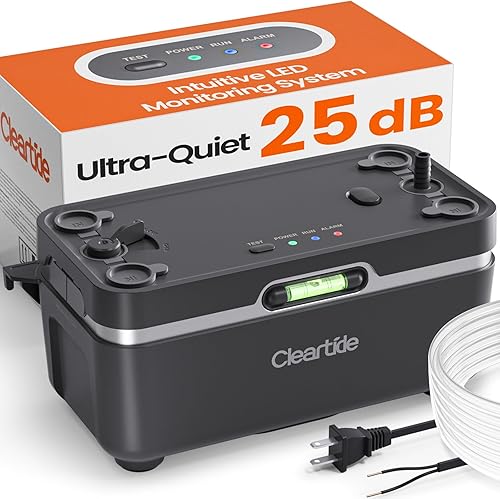 |  |  |  |  |
|---|---|---|---|---|---|---|---|---|---|---|
| Product | Little Giant VCMA-15ULST | Asurity ULTRACP-22 | Little Giant VCMA-20ULST | Little Giant VCCA-20ULS | Aquastrong 85 GPH Pump | Ultra-Quiet HVAC Pump | Sauermann SI-33 | DiversiTech CP-22LP | DiversiTech CP-22 | Little Giant VCMA-15UL |
| Brand | Little Giant | Diversitech | Little Giant | Little Giant | AQUASTRONG | Cleartide | Sauermann | Diversitech | Diversitech | Little Giant |
| Best for | Best Overall | Best for Limited Space | Best for High Capacity | Best for Furnaces | — | — | Best for Large Systems | Best for Vibration | — | — |
| The listing says | Vertical switch reduces pump footprint 1/50 HP, 1.0 Amps, 60 Watts, 115 Volts motor | 120V automatic condensate removal 22' max vertical lift | Vertical switch reduces pump footprint 1/30 HP, 1.5 Amps, 93 Watts, 115 Volts motor | Dimensions 11.96 in. x 5.02 in. x 5.23 in Removes condensate from HVAC equipment | 85 GPH flow, 20ft vertical lift Includes high-level safety switch | 100-240V, 1/50 HP, 127 GPH, 24.6' lift Water-cooled brushless DC motor | Supports 5.6 tons to 8.4 tons capacity High resistance to environmental pollution | 120V automatic condensate pump 22' maximum vertical lift | 120V automatic condensate pump 22' maximum vertical lift | Vertical switch reduces pump footprint 1/50 HP, 1.0 Amps, 60 Watts, 115 Volts motor |
| More information | Buy on Amazon | Buy on Amazon | Buy on Amazon | Buy on Amazon | Buy on Amazon | Buy on Amazon | Buy on Amazon | Buy on Amazon | Buy on Amazon | Buy on Amazon |
1. Little Giant VCMA-15ULST 115 Volt
Best for: Standard residential air conditioning and dehumidifier drainage.
This pump features a vertical-type switch that keeps the overall footprint small, making it a solid choice for tight utility spaces. Its fan-cooled, 1/50 HP motor is built with an ABS tank and a stainless steel motor shaft. Because it includes an overflow detection switch, you can wire it to shut off your HVAC unit automatically if the tank reaches capacity, preventing water damage.
If your system produces condensate that exceeds 140° F, choose a different model, as this unit is rated for a maximum water temperature of 140° F. You should also check your lift requirements before buying. While the pump moves 65 GPH at a 1-foot lift, its performance drops as the elevation increases, reaching a total shut-off point at 15 feet.
The 20-foot vinyl tubing included in the box helps you get started with the installation right away. However, since the unit requires basic wiring to connect the safety switch, it isn’t the right choice for someone who is uncomfortable working with electrical connections. If you lack experience with low-voltage wiring, hire a professional to ensure the alarm or shut-off function is triggered correctly.
Pros
- Includes overflow detection switch
- Durable ABS tank construction
- Reliable 15-foot shut-off height
Cons
- Requires basic wiring knowledge
- Limited to 65 GPH flow
2. Asurity by Diversitech ULTRACP-22 120V Compact HVAC Condensate Pump
Best for: Installations in basements and attics with limited clearance.
The Asurity ULTRACP-22 is built for flexibility, offering a vertical discharge lift of up to 22 feet. Its compact housing is designed to fit into tight spots where a larger pump might struggle, while still providing four inlet holes for versatile piping connections. The unit is rated to manage condensate temperatures up to 160° F, which makes it suitable for both AC units and high-efficiency gas furnaces.
This model is a strong contender if you need to move water over a significant vertical distance. It may not be the right fit for users who need the absolute highest flow rates, as this model prioritizes a compact, eco-conscious profile over maximum volume.
Pros
- Strong 22-foot vertical lift
- Handles warm condensate effectively
- Features metal mounting tabs
Cons
- Compact focus limits max flow
- No mention of included tubing
3. Little Giant VCMA-20ULST 115 Volt
Best for: High-capacity HVAC systems requiring maximum water removal.
When your cooling system produces a large volume of water, this pump provides the necessary power with its 1/30 HP motor. It manages up to 80 gallons per hour at a 1-foot lift, ensuring that even busy systems stay drained. The thermal overload protection adds a layer of safety, helping the motor last through long, hot seasons.
The inclusion of an overflow detection switch is a major benefit, as it protects your equipment from potential overflow issues. You can wire this switch to either shut down the appliance entirely or trigger an alarm when the tank reaches capacity. If you lack basic wiring knowledge, hire a professional to ensure the safety circuit is correctly integrated.
This pump isn’t recommended for small, low-drain dehumidifiers where such high power and flow capacity would be unnecessary. Use it only when your equipment requires a 20-foot shut-off head or constant high-volume drainage.
Pros
- High 80 GPH flow rate
- Powerful 1/30 HP motor
- Includes overflow detection switch
Cons
- Larger motor draws more power
- Requires basic wiring skills
4. Little Giant VCCA-20ULS 115V
Best for: Equipment with very low drain outlets.
The low-profile design of this pump allows it to fit in spaces where standard vertical pumps simply won’t go. At just 5.23 inches high and 11.96 inches wide, it’s a specialized solution for systems sitting close to the floor. It comes with a 1/4-turn, twist-off check valve that makes it easier to manage the discharge tubing during maintenance. You can connect either 3/8-inch or 1/4-inch ID vinyl tubing using the included adapters.
While it’s great for low-clearance areas, it doesn’t have the same bulky tank capacity as some other models. This means it may cycle more frequently if your system produces a constant, heavy flow of condensate. If your equipment produces a high volume of water, monitor the cycle rate to ensure the motor doesn’t overheat. The unit includes thermal overload protection.
Pros
- Very low height profile
- Includes multiple discharge adapters
- Easy-access check valve
Cons
- Smaller tank capacity
- Not for high-volume continuous flow
5. Aquastrong 1/38 HP 85 GPH HVAC Condensate Pump
Best for: Installations where voltage flexibility is required.
This pump stands out because it operates on either 115V or 230V power, making it a versatile choice for varied electrical setups. It features a hall switch for automatic operation, which is more reliable than traditional mechanical floats. With five inlet ports, you can connect multiple pieces of equipment to a single drain point.
The unit is built from solid plastic that resists corrosion, which is vital in humid environments. If you’re mounting the pump, you must install it vertically on a flat surface or wall. Failure to maintain this orientation will prevent the internal float from triggering the auto-start at 2.28 inches or the auto-stop at 1.26 inches.
This isn’t the right choice for users who want a “plug and play” experience without any maintenance. The manufacturer specifies that you must clean the reservoir, float, and filter basket at least every six months. Neglecting this schedule risks clogs that can cause tank overflow. If you wire the two signal lead wires to your HVAC appliance, the pump will automatically shut off the unit during an overflow event to prevent water damage.
Pros
- Works with 115V or 230V
- Five distinct inlet ports
- Reliable hall switch technology
Cons
- Requires semi-annual cleaning
- Needs vertical installation
6. Ultra-Quiet HVAC Pump
Best for: Indoor spaces where noise must be kept to a minimum.
Operating at just 25 decibels, this pump is engineered for quiet performance in living areas or bedrooms. It uses a water-cooled brushless DC motor that’s both efficient and resistant to corrosion. The inclusion of a test button allows you to check the pump’s function without needing to pour water into the tank, which simplifies the setup process significantly.
The advanced probe technology used here is designed to be more sensitive than traditional float switches. By replacing mechanical parts with electronic probes, the unit avoids the common failure of stuck floats. However, this is a more complex electronic system. If you prioritize simple, field-repairable hardware, the electronic sensitivity of this probe may prove unnecessary for your needs.
Maintenance relies on a micron-level filter to prevent clogs. If you notice a malfunction light, check this filter first, as trapped impurities are the primary cause of flow issues. The pump handles 127 GPH with a 24.6-foot lift, making it suitable for high-volume condensate needs.
Pros
- Very quiet operation
- Useful test button included
- Advanced probe sensing technology
Cons
- Higher complexity than mechanical models
- Requires careful probe maintenance
7. Sauermann SI-33-230V Mini Condensate Removal Pump
Best for: Large, heavy-duty commercial air conditioning systems.
Designed for systems between 5.6 and 8.4 tons, this pump is built for environments that demand consistent, professional-grade performance. It handles cooling loads ranging from 67 kBtu up to 100 kBtu. The unit is designed with high resistance to pollution and is capable of discharging small particles. Its ability to discharge small particles ensures the system remains clear under difficult conditions.
This unit is a professional-grade component and is often overkill for a standard home air conditioner. If your system falls below the 5.6-ton threshold, the extra capacity and specialized build of this pump will provide no functional benefit. You should only select this model if your cooling load meets or exceeds the 20 kW minimum. Matching this pump to smaller residential units results in unnecessary expense and installation complexity.
Pros
- Handles large cooling capacities up to 8.4 tons
- High resistance to environmental pollution
- Proven commercial reliability
Cons
- Oversized for small homes
- Specific to large tonnage systems starting at 5.6 tons
8. DiversiTech CP-22LP Automatic Condensate Pump
The CP-22LP is designed with a removable check valve, which allows for quick cleaning without needing to disconnect the entire plumbing setup. This feature is the primary reason to choose this model, as it prevents debris buildup from shortening the pump’s lifespan.
It includes vibration-dampening feet that help lower the noise level during operation, making it a polite addition to a quiet household. It’s a straightforward, 120V pump that handles standard condensate temperatures up to 160° F.
If your system produces high-volume discharge, look elsewhere. The CP-22LP is built for standard HVAC/R equipment where the lift requirement is within typical residential ranges. If you find your reservoir overflowing, your system’s output volume likely exceeds this pump’s capacity.
Always verify your vertical lift requirement before purchasing. If your drainage path is too steep, the pump will not meet its rated lift capacity. Use this pump only when your vertical lift remains within the manufacturer’s recommended range to ensure consistent, dependable performance.
Pros
- Removable check valve simplifies maintenance
- Vibration-dampening feet reduce noise
- Solid 120V motor performance
Cons
- Not for high-volume systems
- Standard lift capacity
9. DiversiTech CP-22 Series Automatic Condensate Pump
Best for: Reliable, no-frills condensate management.
This model is a classic choice, sharing the durable design features of the CP-22 series. It provides a standard lift height sufficient for most home installations including basements and attics. It uses metal mounting tabs for a secure installation and includes four inlet holes for easy pipe routing.
Check your condensate temperature before installation. If your equipment produces discharge exceeding 160° F, this unit will fail; you must choose a pump rated for high-heat industrial applications instead.
The pump activates automatically only when water hits a specific level in the reservoir. If you need constant drainage or ultra-quiet operation, this basic mechanical design may prove too intrusive for living spaces. Use the removable check valve to simplify your maintenance routine and prevent backflow issues during off-cycles.
Pros
- Proven, reliable design
- Secure metal mounting tabs
- Easy installation with four inlets
Cons
- Basic, functional design only
- No advanced sensing features
- Not suitable for temperatures above 160° F
10. Little Giant VCMA-15UL 115 Volt
Best for: Simple setups where a safety switch isn’t required.
The VCMA-15UL is the version of the VCMA-15 series that omits the overflow detection switch. It features the same vertical-type switch and 1/50 HP motor as the rest of the line, providing 65 GPH of flow at a one-foot lift. It’s a compact, reliable unit for basic drainage needs where you aren’t concerned with wiring a safety alarm or shutdown.
If your appliance is located in a finished basement or near sensitive electronics, choose a model with an integrated overflow switch instead.
The unit handles water temperatures up to 140° F. It includes a 3/8-inch barbed discharge adapter with a built-in check valve and three inlet drain holes.
Pros
- Compact vertical footprint
- Reliable fan-cooled motor
- Simple, effective drainage
Cons
- No overflow safety switch
- Basic features only
How to Choose in Sixty Seconds
Which lift height do I really need?
Lift height is the vertical distance the pump must push water from the reservoir to the drain point. Always measure the distance from the floor where the pump sits to the highest point of your drain line. If your drain pipe goes up into a ceiling or attic before heading outside, that full vertical distance is your lift height. Most standard residential pumps handle common vertical drainage distances easily. The listing doesn’t mention the consequences of operating near the lift limit.
Do I need a safety switch?
Yes, if the pump is located in a finished area where a leak would cause damage to floors, walls, or ceilings. An overflow safety switch can be wired to your air conditioner’s control board to shut the system down if the pump stops working or the reservoir fills up. This prevents the water from spilling over the sides of the pump tank. If your pump is in a basement with a floor drain nearby, you might skip the switch, but it’s almost always a smart safety investment. It effectively turns a potential flood into a simple maintenance task.
How often should I clean the reservoir?
Condensate pumps collect dust, algae, and minerals from the air and your cooling equipment. The listing doesn’t mention a universal cleaning schedule for all condensate pumps. If you notice the pump is running more often than usual or making strange noises, it may be clogged. A quick rinse with warm water and a mild cleaning agent is usually all that’s needed. Neglecting this maintenance is the most common reason for pump failure. If you aren’t comfortable performing this task, consider choosing a model with easier access to the internal components.
Related guides
- 10 Best Mini Split Condensate Drain Pumps for Reliable Drainage
- 10 Best Clear AC Condensate Drain Tubing Picks for Your Unit
Frequently Asked Questions
What does the pump need to function?
Every pump on this list requires a stable, level surface and a dedicated 115V or 120V power outlet. You must secure the drain line to the discharge barb and install the unit vertically to ensure the float mechanism functions correctly. Note that some models require wiring a safety switch to prevent potential overflows.
What maintenance does the pump require after installation?
You should inspect the reservoir and float switch every six months to clear away sludge or debris. Cleaning prevents the float from sticking and keeps the discharge tube clear. If you fail to perform this maintenance, the pump may cycle too frequently or suffer from blockages.
Which part of the pump fails first?
Algae or debris buildup often causes float switches to fail, which is why advanced models use probe technology to avoid moving parts. Keeping the reservoir clean and the discharge tubing free of kinks are the best ways to prevent these failures. Note that motors can still wear out if forced to exceed their rated lift height.
Is the simplest pump on the list enough?
A simple model like the Little Giant VCMA-15UL is adequate for basic setups requiring straightforward drainage. These units perform reliably but lack the automatic shutdown feature found in more advanced pumps. If your pump is placed in a living area, a model with a safety switch is recommended to protect your home from water damage.
Closing
Selecting the right condensate pump requires balancing your system’s lift requirements with the need for safety features like an overflow detection switch. For most standard residential setups, the Little Giant VCMA-15ULST stands out as a reliable choice because it includes both the necessary safety switch and twenty feet of vinyl tubing.
If you’re working in a very tight space, the Asurity ULTRACP-22 offers a high lift capacity in a compact housing. If your system lacks an overflow switch, you risk water damage from tank overflows; always prioritize models that include this safety feature to shut down your appliance automatically.
Maintenance is the most common mistake homeowners make. You must clean the reservoir, float, and filter basket at least every six months to prevent clogging. Once you have made your selection, verify your electrical connection and ensure your tubing diameter matches the pump’s discharge adapter to keep your system running smoothly.