Choosing the best ac pipe flaring tool comes down to how often you work with HVAC lines and the types of metal you encounter. While some tools prioritize portability and weight, others focus on heavy-duty construction or dual-power options to reduce physical strain. The main differences lie in their clutch mechanisms, material compatibility, and how they ensure the depth of the flare remains consistent.
Best overall: NAVAC NTF66 Flaring Tool, which uses an internal clutch to prevent over-torquing and includes a robust nitride treatment for long-term durability in professional settings. Most lightweight: CPS BLACKMAX BFT850, which provides an eccentric cone design in an ultra-lightweight frame that’s easy to carry for technicians who move between job sites constantly. Most durable construction: RIDGID 83037 458R, a ratcheting tool built in the United States that offers a reliable, sturdy design for those who need to work with steel and stainless steel.
This guide is for anyone looking to upgrade their HVAC toolkit with a reliable, precise flaring solution.
How We Picked
We compared 48 different Amazon listings to find tools that offer reliable performance for HVAC professionals and serious DIY enthusiasts. Every selection had to provide clear specifications regarding tube size ranges, material compatibility, and the presence of a clutch or depth gauge mechanism. We excluded any product that lacked clear manufacturer information or provided vague details about its flaring capabilities. Our goal was to highlight tools that prioritize consistent flare quality to prevent leaks in high-pressure refrigeration systems.
All 10 products side by side — scroll sideways to see every column.
| Top Pick | Runner-Up | Best for Hardware | Best for Swaging | Best for Power Drills | Best for Smooth Turning | Best for Brake Lines | Best for Double Flares | |||
| Preview |  |  |  |  |  |  | 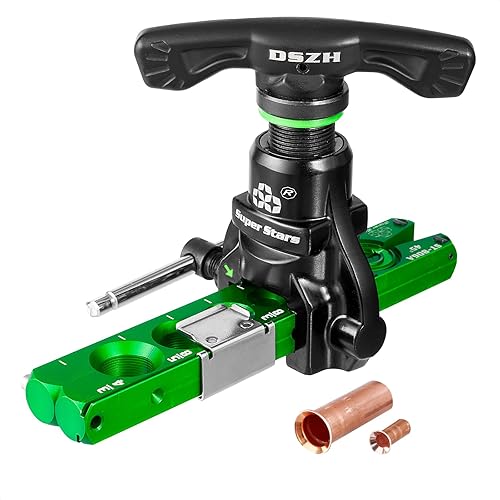 |  |  |  |
|---|---|---|---|---|---|---|---|---|---|---|
| Product | NAVAC NTF66 Flaring Tool | CPS BLACKMAX BFT850 | RIDGID 83037 458R | Hilmor 1838952 Orbital Flare | NAVAC NTF67D Flaring Tool | Yellow Jacket 60278 | Super Stars Flaring Tool | OMT Eccentric Flaring Tool | VEVOR Hydraulic Flaring Tool | RIDGID 23332 345 |
| Brand | NAVAC | CPS | RIDGID | Hilmor | NAVAC | Yellow Jacket | Super Stars | Orion Motor Tech | VEVOR | RIDGID |
| Best for | Best Overall | Runner-Up | Best for Hardware | Best for Swaging | Best for Power Drills | — | Best for Smooth Turning | — | Best for Brake Lines | Best for Double Flares |
| The listing says | Built-in clutch prevents over-torquing Nitride treatment for durability | Model CPS BLACKMAX BFT850 Ultra-lightweight R-410A design | Used for hardware, rope, chain, and cable Manufactured in United States | Creates 45-degree flares for soft metals Swages tubing from 3/16" to 3/4" | Drill attachment for manual or powered use Built-in clutch prevents over-torquing | Flares 1/8" to 3/4" O.D. tubing Self-centering yoke for 45-degree flares | Large feed screw for smooth turning Integrated location bar and holes | Includes clamping bar for 1/4" to 3/4" tubing Orbital cone prevents tube thinning | Includes 45-degree cone and 3/16"-1/2" dies Manual hydraulic mechanism with relief valve | Hardened cone for 45-degree single or double flares Single clamp screw for easy operation |
| More information | Price on Amazon | Price on Amazon | Price on Amazon | Price on Amazon | Price on Amazon | Price on Amazon | Price on Amazon | Price on Amazon | Price on Amazon | Price on Amazon |
1. NAVAC NTF66 45-Degree Flaring Tool
Best for: HVAC technicians needing consistent, reliable 45-degree flares.
The NAVAC NTF66 stands out for its internal clutch, which protects both the copper tubing and the tool itself from damage caused by over-torquing. The nitride treatment process applied to the tool helps it withstand the rigors of daily use in the field. This model focuses on a patented rivet connection and axial spacing to ensure the flare is accurate every time.
If you find yourself frequently cracking tubing or creating uneven flares, the internal clutch is your primary defense. It stops the flaring process once the ideal pressure is reached. You should apply this tool to copper tubing with outside diameters of 1/4″, 5/16”, 3/8″, 1/2″, 5/8″, and 3/4″.
A mistake many technicians make is forcing the cone beyond the clutch’s limit, which risks structural failure in the copper. Respect the clutch’s feedback to maintain the integrity of your connections. This tool is a solid choice for those who value longevity and want a tool that resists wear. However, if you prefer using a drill for speed, you might find the manual operation here slower than the NAVAC NTF67D.
Pros
- Built-in clutch prevents over-torquing.
- Durable nitride-treated construction.
- Precise axial spacing design.
Cons
- Manual operation only.
- No drill attachment included.
2. CPS BLACKMAX BFT850 Ultra-Lightweight R-410A Clutch-Type Ecentric Flaring Tool
The CPS BLACKMAX BFT850 is built for technicians who prioritize a lightweight tool without sacrificing the precision of an eccentric cone. Weighing only 3.85 pounds, it reduces fatigue during extended use on job sites. Its compact dimensions of 10.2 by 10 by 5 inches allow it to fit easily into a standard tool bag.
This clutch-type mechanism prevents over-tightening by disengaging once the flare is complete. You should choose this model if your daily work involves R-410A refrigeration lines where portability is the primary concern. If you frequently handle heavy-duty steel tubing, look for a more robust hydraulic alternative, as this tool is optimized specifically for the softer copper lines found in HVAC systems.
Avoid the mistake of using this tool on materials outside its intended scope, as forcing the mechanism can damage the clutch. If you’re working in tight spaces, the lightweight design provides the necessary maneuverability that heavier, bulkier tools lack.
Pros
- Ultra-lightweight design.
- Reliable clutch-type mechanism.
- Eccentric cone ensures smooth flares.
Cons
- Limited to specific HVAC use.
- No extra attachments included.
3. RIDGID 83037 Model 458R Precision Ratcheting Pipe Flare Tool
Best for: Professionals working with harder metal types.
The RIDGID 83037 458R is designed for those who need a tool that can handle more than just soft copper. Because it’s built for steel, stainless steel, and hard copper, it’s a workhorse for diverse hardware and plumbing tasks. It relies on a ratcheting mechanism, which differs from the clutch-based design of the NAVAC NTF66.
If you’re working with stainless steel or hard copper, the ratcheting action provides the necessary leverage to complete the flare without excessive physical strain.
This tool is manufactured in the United States and is known for being easy to install and operate.
Pros
- Handles steel and stainless steel.
- Durable ratcheting mechanism.
- Manufactured in the United States.
Cons
- Heavier than specialized copper tools.
- Less focus on automatic clutch stops.
4. Hilmor 1838952 Orbital Flare 3/16”
Best for: Versatile material compatibility in one tool.
The Hilmor 1838952 handles copper, aluminum, steel, and brass with ease. Its spring-loaded clothespin block makes it simple to open the bar and insert tubing. It features a clutch mechanism that provides a clear click when the flare is complete, which prevents cracked tubes caused by over-flaring.
This tool is ideal for professionals who switch between different types of metal piping on the same day. If you only work with soft copper, you might find the size of this 3.8-lb tool unnecessary compared to the more compact RIDGID 23332 345. At 8.5″ in length, it requires more space in your tool bag than smaller models.
Use this tool when you need to cover a wide range of tubing sizes from 3/16″ to 3/4″. The integrated tubing stop guarantees accurate flare height every time. If you feel the handle stop turning, the job is finished. Rely on the detents and the screw bar to maintain proper yoke alignment during the process.
Pros
- Handles a wide range of materials.
- Spring-loaded block for easy use.
- Automatic clutch prevents over-flaring.
Cons
- Requires more space in tool bag.
- Slightly heavier at 3.8 lbs.
5. NAVAC NTF67D Flaring Tool
The NAVAC NTF67D offers both hand and drill-powered operation, making it efficient for repetitive jobs. It features a nitride-treated body for durability and a patented rivet connection that ensures consistent results.
If you’re working with multiple lines, attach your drill to the tool to save time. The built-in internal clutch prevents over-torquing, which protects both the tool and your copper tubing.
The tool handles seven tubing sizes, ranging from 3/16” to 3/4” in diameter. Always use the included NFG1 flare gauge to verify the 45-degree flare before installation.
This tool isn’t ideal if you prefer a purely manual setup or lack a drill. Relying on hand power alone for every flare may lead to fatigue on large projects. Use the one-year warranty if the internal mechanism fails under normal use.
Pros
- Drill-powered option for speed.
- Durable nitride treatment.
- Includes NFG1 flare gauge.
Cons
- Drill not included.
- Slightly more complex setup.
6. Yellow Jacket 60278 Flaring Tool
Best for: Traditionalists who want a professional standard.
The Yellow Jacket 60278 is a classic, professional-grade tool covering a full range of common tubing diameters. Its self-centering yoke ensures the flare is made without marring or constricting the tube. This design is ideal for copper, brass, and aluminum tubing.
Use the automatic tube height gauge to ensure correct tubing height before you begin. If you’re working with soft copper, this gauge prevents the common mistake of setting the tube too high or low, which often results in a cracked or uneven flare.
It isn’t the best choice if you require the clutch-based torque control found in modern eccentric cone models. If you need to avoid over-tightening, look for a tool with an automatic stop.
Pros
- The tool accommodates a wide variety of tubing diameters.
- Self-centering yoke design.
- Made in the United States.
Cons
- Lacks modern clutch stop.
- Manual operation only.
7. Super Stars Flaring Tool
Best for: Smooth operation with less hand effort.
The Super Stars Flaring Tool features a large feed screw handle designed to make turning smooth even under pressure. Its eccentric cone produces a 45-degree flare, which is the specific standard required for R410a systems. The location holes on the yoke side ensure precise alignment before you begin.
If you’re working with soft copper, brass, aluminum, or mild steel tubing, this tool handles all standard plumbing and HVAC sizes. Use the integrated location steel bar to lock your pipe in place; failing to seat the tube correctly against these guides often leads to uneven flares that leak under refrigerant pressure.
This tool is built from chrome-plated steel, making it rugged enough for daily industrial use. It isn’t the best pick for a user who wants an ultra-lightweight tool, as it prioritizes professional-grade durability over portability. If you find your flare is cracking, check that your tubing is cut perfectly square before clamping it into the block.
Pros
- Large handle for easy turning.
- Precise location holes for alignment.
- Rugged chrome-plated steel build.
Cons
- Heavier construction.
- No internal clutch mechanism.
8. OMT Eccentric Flaring Tool
Best for: Ensuring accurate depth every time.
The OMT Eccentric Flaring Tool is excellent for those who struggle with visual depth alignment. Its magnetic height limiter snaps into place, ensuring the tube is at the exact depth required before you start flaring. This physical stop eliminates guesswork, providing a consistent flare every time.
The tool features an orbital eccentric cone that rolls the tube wall evenly. This prevents thinning or cracking, resulting in a smooth, mirror-finish flare. Stop turning the handle the moment the built-in clutch clicks.
Constructed from 1045 carbon steel, the yoke resists flexing under high pressure. The kit covers the full spectrum of standard SAE tubing sizes. While the oversized ergonomic handles reduce hand strain, the kit is substantial. It isn’t ideal for someone who prefers a pocket-sized tool, as the heavy-duty components require the included case for organization.
Pros
- Magnetic depth limiter included.
- Strong 1045 carbon steel yoke.
- Clutch clicks when flare completes.
Cons
- Requires a case for parts.
- More components to manage.
9. VEVOR Hydraulic Flaring Tool Kit 45° Double Flaring
Best for: Brake line and complex piping repairs.
The VEVOR Hydraulic Flaring Tool uses a manual hydraulic mechanism rather than a manual screw. This design allows for 45° double flares and ISO bubble flares with minimal physical effort. It’s specifically engineered for 3/16″ to 1/2″ pipes, including GM fuel lines and transmission cooling lines.
The kit includes a mini pipe cutter and a deburring tool. Use the cutter for 1/8″ to 5/8″ tubing and the deburrer to clean both the interior and exterior surfaces before flaring.
Constructed from 40 CR steel, the tool is designed for long-term durability. All components store securely in a plastic toolbox to prevent loss. While ideal for vehicle repairs and refrigeration work, the hydraulic setup requires more preparation time than a standard eccentric tool. Reserve this hydraulic kit for high-pressure lines where precision and structural integrity are mandatory.
Pros
- Hydraulic power reduces effort.
- Includes cutter and deburrer.
- Handles double and bubble flares.
Cons
- Slower setup for simple jobs.
- More parts to keep track of.
10. RIDGID 23332 345 Flaring Tool
Best for: Small, tight spaces where larger tools fail.
The RIDGID 23332 345 is a compact tool designed for 45-degree flares. Its single clamp screw allows for quick loading and removal of tubing. If you’re working in a cramped area where larger tools can’t fit, this is your best option.
It’s a basic, no-frills tool. It lacks the advanced clutch or magnetic stops found in other models, so it requires manual care to avoid over-flaring. You must watch the flare progress closely, as there’s no automatic depth gauge to signal when the work is complete.
Choose this tool when portability and clearance are your primary constraints. If you require precise, repeatable torque or high-volume production, a larger model with a built-in stop is a safer investment.
Pros
- Very compact for tight spots.
- Simple single-screw operation.
- Reliable hardened steel cone.
Cons
- Lacks advanced torque control.
- No depth gauge included.
- Requires manual precision to prevent over-flaring.
How to Choose in Sixty Seconds
Material Compatibility
The most important factor is the type of tubing you work with. If you only flare soft copper for residential HVAC, a standard eccentric tool like the NAVAC NTF66 is perfect. If you need to work with harder metals like stainless steel or brass, you must select a tool rated for those materials, such as the RIDGID 83037 458R. Always confirm the tool’s capability with the ANSI/AHRI standard for refrigeration piping to ensure your flares meet safety requirements. Never assume a tool made for soft copper can handle hard steel, as it will likely damage the tool or result in a poor, leak-prone connection.
Power and Effort
Consider how much manual labor you want to perform. The NAVAC NTF67D is a great choice because it allows you to attach a drill, which significantly speeds up the process. For automotive lines or highly specific flare types like double flares, the VEVOR Hydraulic Flaring Tool removes the physical strain of turning a screw entirely. However, if you only perform occasional maintenance, a manual eccentric tool is usually sufficient and avoids the need for battery-powered accessories or hydraulic fluid maintenance.
Precision Features
Precision prevents leaks. If you often struggle to get the tube depth right, look for tools with built-in stops. The OMT Eccentric Flaring Tool uses a magnetic limiter to lock the tube in place, which eliminates guesswork. Clutches are another vital feature; they prevent you from crushing the copper by clicking when the flare is finished. If you’re a beginner, prioritize tools with both a clutch and a depth gauge.
Frequently Asked Questions
Do I need a hydraulic tool for my HVAC lines?
Most standard HVAC copper lines do not require a hydraulic tool. Hydraulic flaring tools are designed for automotive brake lines or high-pressure industrial applications requiring double or ISO bubble flares. Use an eccentric model for HVAC work unless you are specifically tasked with high-pressure steel lines.
How do I prevent my copper tubing from cracking?
Cracking usually occurs from over-tightening or unclean tube cuts. Using a tool with a built-in clutch, such as the NAVAC NTF66 or Hilmor 1838952, prevents over-torquing by stopping when the flare is formed. Always use a sharp pipe cutter and deburring tool to ensure a smooth edge before flaring.
Can I use these tools on aluminum tubing?
Many listed flaring tools, such as the Hilmor 1838952 and Yellow Jacket 60278, are compatible with aluminum tubing. Aluminum is softer than copper, so you must be careful not to over-flare the material. Always verify that the tool is specifically rated for aluminum before use to ensure a proper seal.
What is the advantage of an eccentric cone?
An eccentric cone spins off-center to roll the metal out gradually, preventing thinning or cracking at the flare edge. This design produces a smooth, mirror-finish surface essential for high-pressure refrigerants like R-410A. Almost all professional-grade HVAC tools now use this design to ensure reliable, leak-proof connections.
Closing
For most HVAC professionals, the NAVAC NTF66 remains the top choice due to its balance of durability and the safety provided by its internal clutch. This clutch is critical; it prevents over-torquing, which protects both the tool and the copper tubing from damage.
If you need more speed for high-volume work, the NAVAC NTF67D is the logical step up. It offers the same internal clutch reliability with the added convenience of drill-powered operation. When choosing, prioritize the clutch mechanism if you struggle with cracked tubes; it provides a tactile click to signal that the job is done.
For those who frequently handle harder metals like steel or stainless steel, the RIDGID 83037 458R provides a specialized, rugged alternative. If you’re working with soft copper, aluminum, or brass, many eccentric cone models will suffice. Whichever tool you select, ensure your tubing is cut clean and deburred before starting.