
Choosing the right cutter depends on how often you work with copper and how much space you have in the wall or chassis. Power tools save significant time on large jobs, while manual cutters offer precision and reliability for smaller, everyday tasks.
Best overall: Milwaukee M12 Tubing Cutter, which provides automatic adjustment and a high-powered motor that works up to 10 times faster than manual tools for efficient plumbing work. Best for frequent power users: DEWALT 20V MAX Cutter, which features a variable speed trigger and a pivoting head, allowing for fast cuts in tight spaces with 90-degree rotation capabilities. Best for manual precision: Ridgid 150 Tubing Cutter, which includes an enclosed feed screw to prevent clogging and a fold-away reamer, making it a dependable choice for clean, close-to-flare cuts.
The rest of this guide is for professionals and DIY enthusiasts who need reliable tools for copper, brass, or aluminum piping.
How We Picked
We compared 48 different Amazon listings to find tools that offer clear specifications and useful features. A product earned a spot only if the listing provided specific cutting capacities, material compatibility, and clear functional benefits like automatic adjustment or reaming tools. We excluded items that lacked essential technical details or had unclear usage instructions. Our focus remained strictly on the manufacturer’s stated features, ensuring that the recommendations reflect the tools’ intended capabilities for HVAC and plumbing tasks.
All 10 products side by side — scroll sideways to see every column.
| Top Pick | Best for Heavy Duty | Best for Reaming | Best for Tight Spaces | Best for Manual Cuts | Best for Snap Cuts | Best for Restricted Areas | Best for Small Tubing | Best for Deburring | Best for 360 Rotation | |
| Preview |  |  |  |  |  |  | 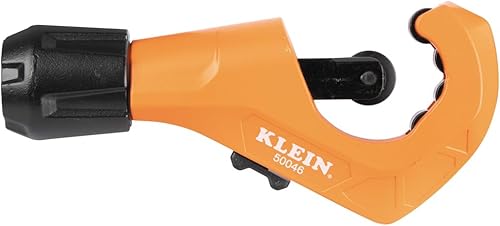 |  |  |  |
|---|---|---|---|---|---|---|---|---|---|---|
| Product | Milwaukee M12 Tubing Cutter | DEWALT 20V MAX Cutter | Ridgid 152 Tubing Cutter | Ridgid 118 Tubing Cutter | Ridgid 150 Tubing Cutter | Ridgid 57008 C-Style | Klein Tools 50046 | Ridgid 103 Mini | Heavy Duty Pipe Cutter | Ratcheting Tubing Cutter |
| Brand | Milwaukee | DEWALT | Not stated | RIDGID | Not stated | Not stated | KLEIN TOOLS | Not stated | TOLESA | Musibo |
| Best for | Top Pick | Best for Heavy Duty | Best for Reaming | Best for Tight Spaces | Best for Manual Cuts | Best for Snap Cuts | Best for Restricted Areas | Best for Small Tubing | Best for Deburring | Best for 360 Rotation |
| The listing says | Fits 3/8" to 1" copper pipes Water resistant sealed motor head | Cuts 1/4 in. to 1-1/4 in. tubing Cuts 2X faster than Milwaukee 2471 | Ergonomic X-cel knob design Quick-acting I-beam construction | 32573 2-in-1 automatic feed cutter Made in United States | Enclosed feed screw and grooved rollers Ergonomic X-CEL knob | Cuts 1/2" and 3/4" tubing Quick change wheel pin | Cuts 1/8-Inch to 1 3/8-Inch tubing Designed for tight work areas | 1/8" to 5/8" cutting capacity Compact for restricted spaces | SKD wheels and 6 ball bearings High-density aluminum alloy body | 5/16-1 1/8 Inch capacity Ratcheting mechanism for flexibility |
| More information | Check Latest Price on Amazon | Check Latest Price on Amazon | Check Latest Price on Amazon | Check Latest Price on Amazon | Check Latest Price on Amazon | Check Latest Price on Amazon | Check Latest Price on Amazon | Check Latest Price on Amazon | Check Latest Price on Amazon | Check Latest Price on Amazon |
1. Milwaukee 2471-20 M12 Cordless Lithium Ion 500 RPM Copper Pipe
Best for: HVAC technicians needing high-speed, repetitive cuts.
This tool stands out for its automatic adjustment, which handles type K, L, and M copper pipes ranging from 3/8″ to 1″. The sealed head prevents water damage, meaning you can use it confidently in wet plumbing environments without worrying about the motor. Compared to manual cutters, this unit relies on a battery-powered motor to do the heavy lifting.
The motor operates at 500 RPM, which allows you to finish tasks up to 10 times faster than using standard hand-operated saws or pipe cutters. This speed advantage makes it a significant time-saver on large jobs where you must make dozens of cuts in a single day.
If you have very little room, the low clearance design allows operation within 1 1/2″ of a wall. This is a major benefit when working in cramped utility closets or behind existing pipework where a traditional manual cutter would be impossible to rotate. It isn’t for users who prefer non-powered tools, as it requires an M12 battery to operate. Keep in mind that the tool is sold as a power tool only, so you must already own a compatible M12 battery to operate it.
Pros
- Automatic adjustment for multiple pipe types
- Sealed head protects motor from water
- Operates in tight 1 1/2″ clearance
Cons
- Battery not included in package
- Heavier than manual hand tools
2. DEWALT 20V MAX XR 1-1/4 in. Copper Tubing Cutter (DCE154B)
Best for: Professionals requiring heavy-duty power and speed.
This cutter features an innovative pivoting head with 90-degree rotation, which is useful when you’re working in awkward, cramped jobsite environments. Its variable speed trigger gives you control over the cut, allowing you to match the speed to the specific pipe material. While the Milwaukee M12 is a strong competitor, this DEWALT model is designed specifically for faster cutting performance, completing tasks up to twice as fast.
The auto-size adjustment mechanism means you can switch between different pipe sizes without needing to swap out any parts. This allows you to transition between 1/4 inch and 1-1/4 inch K, L, and M copper tubing seamlessly. Because the tool requires 46% less cut clearance than the Milwaukee 2471-20, it remains highly effective in tight, restricted spaces.
It isn’t for someone looking for a non-powered tool, as the 20V system requires a battery to operate. However, the durable, corrosion-resistant components are engineered to withstand tough jobsite conditions. You can expect to make up to 550 cuts per charge, ensuring high productivity throughout the workday.
Pros
- Pivoting head offers 90-degree rotation
- Fast cutting speed under 1.2 seconds
- Variable speed trigger for user control
- Auto-size adjustment for versatile pipe handling
Cons
- Larger footprint than manual cutters
3. Ridgid 152 Tubing Cutter
Best for: Users who need a wide cutting range.
The Ridgid 152 features a quick-acting design that uses a thrust-bearing slide assembly for smooth operation. Its X-cel knob is larger and more ergonomic than standard knobs, providing a better grip when you’re applying pressure. Unlike the Ridgid 103, this model handles larger tubing up to 2-5/8 inches.
This tool relies on I-beam construction and hardened wear surfaces to maintain its shape under heavy use. These components ensure the cutter remains durable even when you’re working with the larger materials allowed by its 6 mm to 66 mm capacity.
The fold-away reamer is built-in, which helps you clean the pipe edges immediately after cutting for a better connection. You can also swap out the cutter wheel without needing extra tools or risking lost clips, thanks to the ball detent design on the X-cel wheel pin.
The listing doesn’t mention the tool’s suitability for extremely tight spaces.
Pros
- Large capacity up to 2-5/8 inches
- Ergonomic X-cel knob design
- Includes fold-away reamer tool
- Tool-free wheel changes
Cons
- Larger size limits use in tight spots
4. RIDGID 32573 Model 118 2-in-1 Close Quarters Tubing Cutter
Best for: Tight, close-quarters plumbing work.
This 2-in-1 tool is designed specifically for environments where standard cutters can’t fit. The automatic feed system simplifies the process by maintaining consistent pressure on the pipe as you turn the tool. This is a compact option with a 1/4″ to 1-1/8″ cutting capacity.
Because the cutter is built for tight spaces, it excels when you’re working against a wall or in a cramped cabinet. You don’t need to manually tighten the knob as you rotate the tool around the pipe. The internal spring mechanism handles the tension for you, which results in a cleaner, more uniform cut with less effort.
The design is straightforward and focuses on portability for tool bags. It isn’t for users who need to cut pipes larger than 1-1/8 inches, as this is the maximum capacity for this specific model. You should choose this tool when maneuverability is your primary concern, rather than heavy-duty pipe diameter.
Pros
- Compact profile for tight spaces
- Automatic feed mechanism included
- Simple 2-in-1 design
Cons
- Limited to 1-1/8 inch capacity
5. Ridgid 150 Tubing Cutter
Best for: Clean, consistent manual cuts.
The Ridgid 150 uses an enclosed feed screw that keeps debris out, which prevents the common issues of clogging and jamming. This design ensures the tool operates smoothly even in dusty environments where grit usually ruins the threads. The grooved rollers allow you to make cuts very close to a flare, which is essential for precise HVAC work. Compared to the Heavy Duty Pipe Cutter, this model is built with high-strength zinc alloy for durability.
The tool features an ergonomic X-CEL knob that provides a firmer grip, allowing you to apply consistent pressure to cut tubing quickly. An innovative ball detent wheel pin also allows for tool-free cutter wheel changes in seconds, meaning you never have to fumble with lost clips. A spare cutter wheel is stored directly in the knob, so you’re rarely caught without a fresh edge.
It isn’t for someone who needs to cut larger pipes, as the capacity is limited compared to professional-grade heavy-duty models. This cutter handles copper, brass, aluminum, and thin-wall conduit within its range.
Pros
- Enclosed feed screw prevents clogging
- Spare wheel stored in handle
- Grooved rollers for flare cuts
Cons
- Maximum pipe capacity for small-diameter tubing.
6. Ridgid 57008 C-Style
Best for: Quick, repetitive snap-on cuts.
This C-style cutter is built for speed, allowing you to snap it onto 1/2″ or 3/4″ tubing instantly. The spring-loaded wheel maintains constant pressure on the pipe, which ensures you get a clean cut without manually tightening the knob constantly. The listing doesn’t mention the speed of the Ridgid 150.
The tool-free wheel replacement feature makes maintenance fast when the blade eventually dulls. Because it uses the X-Cel wheel pin, you can swap out the cutter wheel in seconds without hunting for a screwdriver or hex key.
It isn’t for users who need to cut a wide variety of pipe diameters, as it’s strictly limited to 1/2″ and 3/4″ sizes. While other cutters adjust to fit any pipe within their range, this model relies on a fixed geometry that only works for these two specific diameters. If your work involves a mix of odd-sized or larger piping, this tool won’t be able to grip the surface.
Pros
- Snap-on feature for fast connection
- Spring-loaded constant pressure
- No tools needed for wheel changes
Cons
- Limited to a narrow range of pipe diameters.
7. Klein Tools 50046 Constant Swing Tubing Cutter
Best for: Professional manual cutting in restricted areas.
The Klein Tools 50046 is a constant swing cutter that handles copper and aluminum up to 1-3/8 inches. Its free-spinning rollers are designed to provide smooth, precise cuts without slipping. Compared to the Milwaukee M12, this tool requires manual effort and is a battery-free solution.
The adjustment knob is ergonomically shaped, making it easier to handle when your hands are greasy or you’re wearing gloves. The constant swing design allows you to maintain consistent pressure as you rotate the tool around the pipe. This is vital when you have limited room to maneuver your hands or the tool body.
It isn’t for someone working with hard stainless steel, as this tool is specifically optimized for softer materials like copper and aluminum. If you primarily work in tight residential or commercial spaces, the compact frame provides the precision you need.
Pros
- Smooth cutting with free-spinning rollers
- Ergonomic knob for better handling
- Durable blade for long life
Cons
- Manual operation takes more effort
8. Ridgid 103 Mini
Best for: Extremely small, restricted pipe spaces.
The Ridgid 103 is a mini cutter with a very compact profile, perfect for reaching pipes tucked away in tight corners. It handles diameters from 1/8″ to 5/8″, making it ideal for small-diameter tubing. This mini cutter is designed for small-diameter tubing in restricted spaces.
This tool is specifically engineered for restricted spaces where standard cutters can’t fit. Because of its size, it remains highly maneuverable while maintaining a sturdy, lightweight housing. The high-quality steel wheel ensures clean cuts on copper, brass, aluminum, and plastic.
The feed screw knob is large and knurled to give you better control over the cutting pressure. It isn’t for users who need to cut standard household plumbing pipes, as its capacity is strictly limited to small-diameter tubing. You also get a spare cutter wheel conveniently stored inside the knob, which helps ensure maximum uptime when you’re working in difficult spots.
Pros
- Extremely compact for tight jobs
- Spare wheel included in knob
- Sturdy, lightweight housing
Cons
- Very small cutting capacity
9. Heavy Duty Pipe Cutter
Best for: Heavy-duty cutting with integrated deburring.
This cutter uses six high-density ball-bearing rollers to hold the pipe firmly. This design prevents the tool from wobbling during the cut, which is essential when working with harder metals like stainless steel. It includes a separate deburring tool to smooth out the edges of your pipe, which is a helpful addition for professional installations. This tool handles pipes up to 2 inches.
The aluminum alloy body provides a balance of strength and lower weight, making it feel solid in the hand. It’s durable enough to withstand repeated use without breaking, ensuring a longer service life for your plumbing projects. It isn’t for users who want a tool that fits in a pocket, as the substantial cutting capacity makes the frame physically larger than mini cutters.
The integrated knob at the bottom allows for quick adjustments and provides a strong clamping force. This ensures the pipe remains stable throughout the entire process. Whether you’re working on electrical, air conditioning, or automotive maintenance, this tool offers the precision needed for a flawless cut.
Pros
- Six ball bearings for stability
- Integrated deburring reamer included
- Accommodates standard plumbing pipe sizes.
Cons
- Larger frame size
10. Ratcheting Tubing Cutter
Best for: 360-degree rotation in tight spaces.
The ratcheting mechanism on this cutter allows you to work in tight spaces by moving the handle back and forth rather than rotating the whole tool. It comes with a dual-purpose design that provides extra leverage when you need it. Unlike the Ridgid 118, the ratcheting motion makes it easier to use when you can’t complete a full circle around the pipe.
This tool rotates fully around the pipe, which ensures a smooth, clean cut even in cramped quarters. You simply use the bottom knob to adjust the clamping force, matching the pressure to the specific thickness and material of your pipe. This stability is vital for precision.
It includes a deburring tool in the package, which saves you from buying an extra component for finishing the pipe edges. It isn’t for users cutting thin, soft plastic tubing, as the manufacturer notes that such materials may not cut correctly with this mechanism. Rigid PVC must be at least 0.01 inches thick to work properly.
Pros
- Ratcheting mechanism for tight spaces
- Includes extra deburring tool
- Dual-purpose design for flexibility.
Cons
- Not for thin, soft plastic
How to Choose in Sixty Seconds
Power vs. Manual
Decide based on your volume of work. If you’re a contractor making dozens of cuts daily, power tools like the Milwaukee M12 or DEWALT 20V MAX will save your wrists and significantly increase your speed. These tools remove the manual labor of turning the knob and rotating the cutter around the pipe. However, if you’re a homeowner or a technician doing occasional maintenance, a high-quality manual cutter like the Ridgid 150 is more reliable. Manual tools have fewer parts to break, require no batteries, and are lighter to carry in a tool belt.
Size and Clearance
Measure the space where you usually work. If you’re working on pipes flush against a wall or in tight wall cavities, a close-quarters tool like the Ridgid 103 or a ratcheting model is essential. These tools are designed to operate with minimal rotation space. Always verify the maximum diameter of the pipe you need to cut. A tool designed for larger plumbing work, like the Heavy Duty Pipe Cutter, will be much bulkier than a mini cutter. Matching the tool size to your typical pipe diameter ensures you aren’t carrying more weight than necessary.
Material Compatibility
Confirm the hardness of the material you’re cutting. While most copper tubing cutters also handle aluminum, not all are designed for stainless steel or thick-walled pipes. If you work with various metals, look for models that explicitly state they handle hard copper or stainless steel, such as the Heavy Duty Pipe Cutter. Using a tool on material it isn’t rated for can dull the cutting wheel quickly or damage the internal rollers. Always consult the American Society of Mechanical Engineers standards for proper pipe fitting and installation practices to ensure your cuts meet safety requirements.
Klein Tools Micro Tubing Cutter is a great alternative for those who need a very small, manual tool for copper and aluminum. DURATECH Tubing Cutter offers a simple, reliable option for common pipe diameters if you want to avoid complex mechanisms. Finally, the WORKPRO Tubing Cutter Set is useful if you want to keep multiple sizes on hand, as it covers a range of diameters in one package.
Related guides
Frequently Asked Questions
Do I need to replace the cutting wheel often?
Your cutting wheel lasts longer when you cut softer materials like copper rather than stainless steel. You should replace the wheel when the tool slips or the cut surface becomes jagged. Keep a spare wheel on hand, as some models like the Ridgid 150 store one in the knob.
Can I use these tools on PVC pipe?
Check your specific model’s manual to confirm if it is rated for plastic or PVC. Some cutters struggle with thin plastic, as the material may collapse under wheel pressure. For frequent PVC work, a dedicated shear-style cutter is often more effective than a wheel-based copper cutter.
How do I ensure a perfectly square cut?
Ensure the pipe is fully seated against the rollers before tightening the knob to achieve a square, leak-free cut. Apply small, steady amounts of pressure while rotating the tool to prevent spiraling. The six-roller design on the Heavy Duty Pipe Cutter helps maintain stability during this process.
What is the advantage of an enclosed feed screw?
An enclosed feed screw protects internal threads from debris, ensuring the tool operates smoothly over time. This design prevents copper shavings and dust from jamming the mechanism, which is common in exposed screw models. It reduces the need for frequent maintenance, keeping the adjustment knob moving freely.
Conclusion
Investing in a high-quality tool makes your future repairs much smoother and less frustrating. Before your next project, take a moment to inspect your current gear for worn blades that might crush the metal. You’ll find that a clean, sharp cut is the best way to ensure a leak-free connection every time.