
Choosing the right insulation for your AC drain pipe is about matching the material to your specific pipe run and weather conditions. Some options provide a full protective sleeve for long outdoor sections, while others use adhesive tapes for complex bends and tight spaces.
Best overall: 5 Layers HVAC Cover, for its 78.7-inch length that reduces joints and its multi-layer structure designed to withstand harsh weather conditions. Best for tight spaces: Supkiir Foam Tube, as its pre-slit, self-adhesive design allows for quick application on individual pipes without needing extra tools. Best for complex shapes: XFasten Foam Tape, which offers high tensile strength and flexibility to wrap around elbows and irregular joints where sleeves can’t fit.
The rest of this guide is for homeowners looking to protect their HVAC lines from moisture, sun, and temperature loss.
How We Picked
We compared 48 different Amazon listings for AC pipe insulation wraps to find products that offer clear specifications and reliable protection. Each chosen item had to list its dimensions, material composition, and intended use clearly in the product data. Products were selected based on their ability to handle outdoor elements like UV exposure and moisture, or their specific utility in insulation tasks. We excluded items that lacked clear sizing or material information, ensuring only products with documented features made the list.
All 10 products side by side — scroll sideways to see every column.
| Top Pick | Best for Tight Elbows | Best for Plumbing Systems | Best for Sweating Pipes | Best for Shock Absorption | Best for Condensation | Best for Outdoor Use | Best for Small Pipes | |||
| Preview |  |  |  |  |  |  | 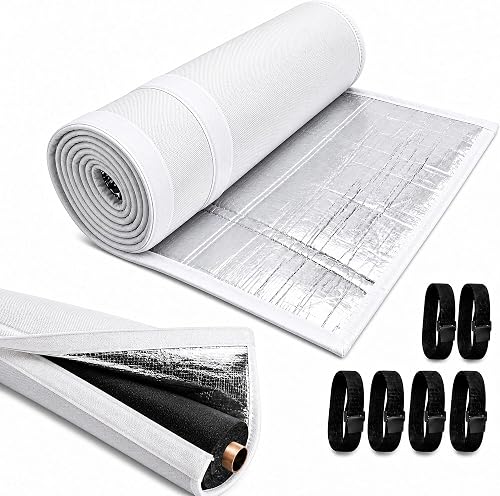 |  |  |  |
|---|---|---|---|---|---|---|---|---|---|---|
| Product | 5 Layers HVAC Cover | XFasten Foam Tape | K-FLEX Elastomeric Insulation | Frost King Rubber Tape | PATIKIL Foam Tube | QWORK Foam Tape | 5 Layers Line Protector | Frost King Fiberglass Wrap | Double Bubble Foil Wrap | Supkiir Foam Tube |
| Brand | AXIFOUJ | XFasten | K-Flex | Frost King | PATIKIL | QWORK | Hofoby | Frost King | DEMEDO | Supkiir |
| Best for | Best Overall | Best for Tight Elbows | Best for Plumbing Systems | Best for Sweating Pipes | Best for Shock Absorption | Best for Condensation | Best for Outdoor Use | — | — | Best for Small Pipes |
| The listing says | 5-layer design for insulation and moisture 78.7 in length reduces joints and waste | 100 lbs/inch tensile strength 0.11BTU thermal conductivity | 3/4" x 6 ft elastomeric insulation 0.25" thick aluminum construction | Reduces heat loss on hot pipes Prevents sweating on cold pipes | 2.01 inch inner diameter, 6ft length Closed-cell structure prevents heat conduction | Resists deformation Prevents moisture and pipe freezing | 600D Oxford fabric with aluminum foil UV-resistant and waterproof construction | Manufactured in China 3" x 1" x 25 ft size | Adhesive backing for easy installation Double bubble design blocks heat loss | Total length 7.87 feet for 1 inch pipe Neoprene and aluminum foil material |
| More information | Check Latest Price on Amazon | Check Latest Price on Amazon | Check Latest Price on Amazon | Check Latest Price on Amazon | Check Latest Price on Amazon | Check Latest Price on Amazon | Check Latest Price on Amazon | Check Latest Price on Amazon | Check Latest Price on Amazon | Check Latest Price on Amazon |
1. 5 Layers HVAC Line Insulation Set Cover 78.7x10in pipe insulation
Best for: Covering long, straight outdoor HVAC line sets.
The 5 Layers HVAC Cover stands out because of its length, which is 6 inches longer than standard 72-inch rolls. This extra reach means you have fewer joints to seal, which helps the wrap look more like a single continuous piece rather than a patchwork. By minimizing these gaps, you reduce the number of potential failure points where moisture or heat could escape.
While the 5 Layers HVAC Cover focuses on long runs, the Supkiir Foam Tube is better suited for shorter, individual pipe segments. This cover uses 600D Oxford material and a pearl cotton core to handle harsh weather. It’s designed to be waterproof and sunproof, protecting the insulation underneath from cracking due to freeze-thaw cycles or UV exposure.
If you need to perform maintenance, the hook-and-loop fasteners allow you to remove and reinstall the cover easily without damaging the material. The sleeve’s flexible structure also lets you follow bends and elbows on complex pipe runs. However, it isn’t for someone who needs to insulate a very thin pipe section where the 2-inch wall thickness would be too bulky to fit.
Pros
- Extra length reduces joints
- Durable 600D Oxford material
- Reusable hook-and-loop closure
- Weatherproof multi-layer design
- Fits tight mechanical rooms
Cons
- Too bulky for narrow pipes
- Not for complex pipe bends
2. XFasten Foam Pipe Insulation Tape 2 Inch x 15 Feet
Best for: Wrapping irregular joints and tight pipe elbows.
The XFasten Foam Tape is built for durability, with a tensile strength of 100 lbs/inch. Unlike the heavy-duty HVAC cover, which is a fixed sleeve, this tape gives you full control over how much material you apply to a specific spot.
Because it’s made of EVA foam, the material conforms to the complex geometry of valves and junctions. This flexibility is critical when your pipes have multiple bends that prevent the use of standard foam tubes. You can pull the tape taut to ensure a snug fit that eliminates air gaps where condensation usually forms.
This tape is rated to last for 25 years against harsh weather, including UV rays, humidity, and corrosion. It helps regulate temperatures and prevents frosting on pipes. It isn’t for someone who wants a quick, one-piece solution for a long, straight copper line, as taping a long distance takes more time than sliding on a sleeve.
Pros
- High tensile strength
- Withstands extreme bending
- Weatherproof against UV and frost
- Easy to cut and apply
- Long-lasting adhesive
Cons
- Time-consuming for long runs
- Requires manual wrapping skill
3. K-FLEX USA 3/4″ x 6 ft. Elastomeric Pipe Insulation
Best for: Commercial or residential pipe temperature regulation.
The K-FLEX Elastomeric Insulation provides a 0.25-inch thick aluminum layer designed for durability. It’s a reliable choice for those who need a specific thickness for standard pipe sizes. While this sleeve is excellent for maintaining consistent temperatures, it doesn’t come with the heavy-duty weather shielding found on the reinforced line protector.
This insulation is suited for both HVAC and plumbing tasks, making it a versatile addition to a toolkit. It’s designed to resist wear and tear in various environments. Because it measures 36 inches wide and 6 feet long, it offers enough coverage for most residential and commercial piping systems.
It isn’t for someone looking for a self-adhesive wrap, as this sleeve requires a separate method to secure it along the length of the pipe. You should plan to use professional-grade tape or fasteners to ensure the insulation remains flush against the pipe surface. This step prevents gaps that could lead to thermal leaks or condensation buildup.
Pros
- Durable aluminum material
- Reliable temperature regulation
- Suitable for many applications
- Maintains pipe efficiency
- Standardized thickness
Cons
- Requires separate securing method
- No integrated adhesive
4. Frost King IT30/8 Rubber Insulation Tape
Best for: Stopping sweating on cold water pipes.
The Frost King Rubber Tape is a straightforward solution for preventing moisture buildup. Its 1/8-inch thickness provides enough insulation to stop pipes from sweating, which keeps the area around your plumbing dry. Because it’s made of rubber, the material remains highly flexible. This allows you to wrap it tightly around elbows, valves, and irregular pipe fittings where rigid insulation often fails to seal properly.
This tape also cuts wasteful heat loss on hot water pipes. By trapping heat inside the pipe, it reduces the energy your system must expend to keep water at the desired temperature. It’s a simple, effective way to improve efficiency without complex tools.
It lacks the reinforced outer shell found in products like the heavy-duty HVAC cover, so it is not intended for long-term direct sunlight exposure. It is best used in basements, crawl spaces, or indoor utility areas where moisture control is the primary goal.
Pros
- Prevents pipe sweating
- Easy to install
- Reduces energy loss
- Flexible rubber material
- Simple application
Cons
- Lacks UV-resistant outer shell
- Minimal thickness for extreme cold
5. PATIKIL Pipe Insulation Foam Tube 2″ (51mm) ID x 6Ft
Best for: Shock absorption and pipe insulation.
The PATIKIL Foam Tube is a closed-cell rubber foam product that acts as both an insulator and a moisture barrier. Its 0.35-inch thickness makes it a solid choice for standard air conditioning units, water heating systems, or irrigation lines. It’s quite flexible, allowing it to bend around pipes without losing its shape.
Beyond HVAC use, the material’s density makes it useful for furniture legs to absorb shocks or as handle grips for fitness equipment to improve friction. It performs reliably across a wide temperature range, from -40°C to 120°C.
Because this product lacks an adhesive backing, you must ensure a snug fit to maintain thermal efficiency. You can easily cut the tube to your required length with standard tools. It’s best suited for users who prefer a friction-fit installation over a peel-and-stick design. Always verify your pipe diameter against the 2.01-inch inner diameter to ensure the tube sits flush against the surface.
Pros
- Closed-cell structure
- Wide temperature range
- Flexible and bendable
- Multi-purpose utility
- Effective moisture barrier
Cons
- No adhesive backing
- Requires manual sizing
6. QWORK Pipe Wrap Insulation
Best for: Waterproofing and protecting pipes from condensation.
The QWORK Foam Tape is designed for stability and resistance to deformation. It’s a 1/8-inch thick tape that you can easily cut to size with scissors to fit any pipe shape. It’s highly flexible, which makes it a good alternative to the XFasten Foam Tape if you want a slightly different adhesive feel for your specific project.
This tape helps prevent condensation on cold water pipes and protects against freezing. Because the material is highly malleable, it conforms well to irregular joints or valves where rigid sleeves fail to seat properly. It’s easy to remove and leaves no residue, making it ideal for temporary seasonal fixes.
It isn’t for someone who needs thick thermal protection for extreme outdoor temperatures, as its 1/8-inch profile is thinner than specialized insulating sleeves. If your primary goal is stopping moisture buildup in a crawlspace or basement, this tape provides a reliable barrier.
Pros
- Easy to cut and shape
- Waterproof design
- No residue upon removal
- Flexible for tight spots
- Protects against condensation
Cons
- Thin insulation profile
- Less durable than heavy sleeves
7. 5 Layers HVAC Copper Line Set Cover Protector Outdoor 80x12Inch,600D
Best for: Long-term UV resistance in outdoor environments.
The 5 Layers Line Protector uses 600D Oxford fabric to block harsh UV rays. It includes 6 adjustable straps to ensure a tight, secure fit, which offers a significant advantage over standard tape-only solutions. While this provides superior sun protection, the XFasten Foam Tape remains the better choice for wrapping smaller, intricate pipe junctions.
The reflective aluminum foil inner layer helps maintain thermal efficiency by preventing energy loss. Because the material is fully waterproof, it keeps lines dry during rain or snow, preventing the degradation that often leads to system repairs.
This sleeve isn’t for someone who needs to insulate a very short pipe, as the 80-inch length is best utilized on longer, continuous runs. However, the flexible design easily conforms to the line sets of mini-splits, central air conditioners, and heat pumps. It’s also fully reusable, making it a stress-free solution for both DIY homeowners and professional technicians who need to access lines for routine maintenance or inspection.
Pros
- Excellent UV resistance
- Includes multiple adjustable straps
- Reflective aluminum foil interior
- Fully waterproof construction
- Easy to remove/reinstall
Cons
- Length may be excessive
- Not for tiny pipes
8. Frost King Foil Backed Fiberglass Pipe Wrap
Best for: Wrapping hot water pipes to reduce heat loss.
The Frost King Fiberglass Wrap is a foil-backed insulation measuring 1 inch thick. It’s specifically designed to cut down on wasteful heat loss, making it a classic choice for hot water systems. While foam options rely on density, this product uses fiberglass to manage thermal transfer.
The wrap is easy to handle and comes with a built-in vapor barrier. This barrier is critical because it prevents condensation from forming on cold water pipes, which otherwise leads to sweating and potential water damage. It’s a reliable, durable option for standard home plumbing.
Because this material is fiberglass, you should wear gloves during installation to avoid skin irritation. It isn’t for someone who needs a waterproof outdoor cover for an AC line set, as this is primarily intended for indoor or protected pipe applications.
Pros
- Effective heat loss reduction
- Includes vapor barrier
- Easy to handle
- Durable construction
- Simple application
Cons
- Not for outdoor exposure
- Fiberglass requires careful handling
9. Double Bubble Foil Wrap
Best for: Reflective heat management in ductwork.
The Double Bubble Foil Wrap features a thickened, bubble-style design that’s excellent at blocking light and preventing heat loss. It has an adhesive back, so you don’t need extra tape to install it. It’s a unique option compared to the foam-based products, as it relies on air pockets for insulation.
You should overlap the material by 1/2-inch as you wrap to ensure the exhaust pipe is completely sealed. This overlap creates a continuous thermal barrier that prevents leaks. Because the material is rigid, it works best on straight runs rather than tight, complex bends.
It’s suitable for portable AC hoses, water pipes, and HVAC ducts. Beyond pipes, the reflective surface acts as a vapor barrier for attics, basements, or metal buildings. It isn’t for someone looking for a thick, soft rubber sleeve, as this material is firm and highly reflective.
Pros
- Adhesive-backed for easy use
- Reflective bubble design
- Good for ductwork
- No extra tape needed
- Blocks light and heat
Cons
- Less flexible than foam
- Reflective surface shows dirt
10. Supkiir 6Pcs Pipe Insulation Foam Tube 1in
Best for: Quick, adhesive-backed insulation for small pipes.
The Supkiir Foam Tube comes with a pre-slit design and self-adhesive backing, making installation much faster than non-adhesive options. It’s made of neoprene and aluminum foil, offering a waterproof and fireproof surface. It’s a great alternative to the PATIKIL Foam Tube if you want a faster, “peel-and-stick” installation experience.
You simply tear away the backing paper and wrap the tube around your pipe. The adhesive is strong enough to ensure the sleeve stays in place without falling off. Because the material resists wear and bad weather, it provides reliable, long-term protection for your plumbing.
It’s suited for copper pipes, AC lines, and outdoor spigots. However, check your pipe size carefully before ordering. These pieces are sized specifically for 1-inch diameter pipes, so they won’t accommodate larger lines. You also get six pieces at 1.3 feet each, totaling 7.87 feet. This makes it ideal for patching specific sections rather than covering long, continuous runs of pipe.
Pros
- Pre-slit and self-adhesive
- Waterproof and fireproof material
- Easy to install
- Provides long-lasting protection
- Effective thermal insulation
Cons
- Limited to 1-inch diameter
- Pieces are relatively short
How to Choose in Sixty Seconds
Material Type
Foam tubes provide a thick barrier against cold, while tapes are better for irregular shapes or elbows. Foil-backed wraps are best for hot water pipes to stop heat from escaping. Always check if the material is UV-resistant if you plan to leave it outdoors, as sunlight may affect standard foam.
Installation Method
Consider how much time you have. Adhesive-backed products like the Supkiir Foam Tube or Double Bubble Foil Wrap save significant time because you don’t need to buy or apply extra tape. Sleeves are faster for long, straight pipes, but they can be difficult to install if you have to thread them over existing pipe connections. If your AC line has many sharp bends or tight turns, skip the rigid sleeves and choose a flexible foam tape instead. Always measure the diameter of your pipe before ordering to ensure the sleeve or tube fits snugly, as a loose fit will reduce the effectiveness of the insulation.
Weather Exposure
If your pipe insulation is outside, it must withstand the elements. Look for “weatherproof” or “UV-resistant” in the product description. Standard indoor foam will crumble under direct sunlight within a season or two. A cover like the heavy-duty HVAC cover provides an extra outer jacket that protects the insulation material from rain, snow, and sun. For short, protected outdoor sections, a high-quality rubber tape may suffice, but for full-length exposed lines, a multi-layer protective sleeve is the better investment to prevent long-term damage to the copper pipes and the insulation itself.
Frequently Asked Questions
Will this insulation prevent my pipes from freezing?
Insulation slows heat transfer to help prevent pipes from freezing, but it cannot guarantee protection in extreme, prolonged cold. The Supkiir Foam Tube and QWORK Foam Tape provide a thermal barrier for stable temperatures. In harsh climates, pair this insulation with heat tape or drain your pipes before winter.
How do I know which size to buy?
Measure your pipe’s outside diameter (OD) before purchasing to ensure a proper fit. For sleeves, the inner diameter must match or slightly exceed your pipe’s OD for a snug seal. For tapes like XFasten, estimate your total length and overlap wraps to ensure full coverage and maximum effectiveness.
Can I use indoor insulation for outdoor pipes?
Standard indoor insulation is not designed for outdoor use and should not be used without a protective layer. Most indoor materials lack UV treatment, which can lead to damage when exposed to sunlight. If using indoor foam outdoors, apply a UV-resistant wrap or sleeve to shield it from the elements.
Does the insulation need to be airtight?
An airtight seal is essential for insulation to function effectively. Gaps allow moisture-laden air to reach the pipe, causing condensation and reducing thermal efficiency. When applying tape, overlap wraps by at least half an inch, and ensure all sleeve fasteners are fully closed to prevent air entry.
Closing
Selecting the right insulation wrap depends on your specific pipe layout and exposure to the elements. For long, straight outdoor runs that need maximum protection from sun and weather, the heavy-duty HVAC cover is our top recommendation. Its multi-layer design creates a robust barrier against UV rays, moisture, and extreme temperatures, while the extended 78.7-inch length minimizes joints and potential failure points.
If you’re working with tighter spaces, complex elbows, or need a quick adhesive solution, the Supkiir Foam Tube is a standout. Its pre-slit, self-adhesive design allows for fast application on smaller or irregular pipe runs. For projects requiring extreme durability against abrasion or long-term outdoor wear, XFasten’s high-tensile foam tape offers a reliable, long-lasting seal.
Always measure your pipe diameter and the total length of your run before you order. Matching the material’s flexibility and weather resistance to your specific installation needs ensures your system remains efficient, protected, and fully insulated year-round.