
Choosing the best heat-resistant hose depends on your specific temperature needs and installation space. These hoses use materials like silicone, nylon, or aluminum, with specific options offering weather-resistant outer layers, thickened nylon cloth with internal spring steel wire, or rugged, wear-resistant nylon construction.
Best overall: AC Infinity Heat-Resistant Ducting, chosen for its flexible build that holds its shape and its specialized threading that ensures a secure, leak-free connection to compatible heater ducts.
Most durable: NOWBALL Automotive Air Duct, selected for its silicone-coated fiberglass construction and steel wire support, which provides a high temperature range for the most demanding automotive or garage environments.
Best thermal efficiency: R4.2 Insulated Flexible Duct, picked for its high-density insulation that prevents heat loss, making it the most effective choice for maintaining consistent temperatures in HVAC systems.
This guide is for anyone looking to replace or install ducting for heaters, cooling systems, or ventilation.
How We Picked
We compared 48 different Amazon listings for heat-resistant air hoses to find the most capable options for various needs. To earn a spot, each product had to provide clear temperature ratings, material specifications, and details on its construction to ensure it could handle heat without failing. We excluded items that lacked clear sizing information or failed to list the materials used in the ducting. By focusing on these technical facts, we ensure you have the data needed to match a hose to your specific ventilation or heating setup.
All 10 products side by side — scroll sideways to see every column.
| Top Pick | Best for Automotive Use | Best for HVAC Systems | Best for Tight Spaces | Best for Diesel Heaters | Best for Smoke Extraction | Best for Commercial Use | Best for Defrost Systems | Best for Intake Needs | ||
| Preview |  | 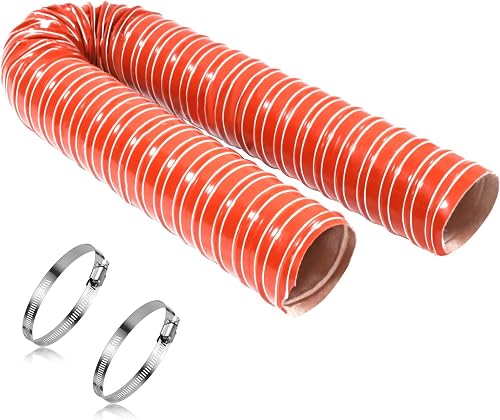 |  |  |  |  |  |  |  |  |
|---|---|---|---|---|---|---|---|---|---|---|
| Product | AC Infinity Heat-Resistant Ducting | NOWBALL Automotive Air Duct | R4.2 Insulated Flexible Duct | PVC Nylon Cooling Duct | Diesel Heater Air Ducting | Heavy-Duty Flexible Hose | Retractable Ventilation Duct Hose | VOSAREA Telescopic Duct Hose | AC Heater Defrost Hose | Silicone Flexible Intake Hose |
| Brand | AC Infinity | NOWBALL | muctamo | Qvzczvq | Marsrut | Generic | LZMZMQ | VOSAREA | Old Air Products | SOVARCATE |
| Best for | Best Overall | Best for Automotive Use | Best for HVAC Systems | Best for Tight Spaces | Best for Diesel Heaters | Best for Smoke Extraction | Best for Commercial Use | — | Best for Defrost Systems | Best for Intake Needs |
| The listing says | Connects to Thermoforge S7 and T7 ducts Thermal-resistant polypropylene construction | 4in diameter, 6.6 feet long Silicone coated fiberglass with steel wire | R4.2 high-density thermal insulation Weather-resistant for indoor and outdoor use | 32mm thickened nylon and spring steel wire Resists -22 – 302°F temperatures | Durable impact-resistant aluminum foil 75mm/2.95" diameter, extends to 200cm/6.56ft | Reinforced polypropylene and steel wire Heat resistant up to 80°C | Heat resistant up to 100°C Flexible and lightweight for tight spaces | High temperature resistant materials Telescopic hose for custom fit | Flexible and easy to install Durable and long lasting | 2inch diameter, 3.3feet long Steel wire reinforced for flexibility |
| More information | Check Price on Amazon | Check Price on Amazon | Check Price on Amazon | Check Price on Amazon | Check Price on Amazon | Check Price on Amazon | Check Price on Amazon | Check Price on Amazon | Check Price on Amazon | Check Price on Amazon |
1. AC Infinity 4-Inch Heat-Resistant Ducting
Best for: Grow tent ventilation and heater connections.
This ducting is engineered specifically to work with Thermoforge S7 and T7 exhaust systems. Its polypropylene construction is designed to keep the exterior cooler while transporting hot air, which is a big plus if you’re working in tight spaces where you want to avoid accidental burns. Unlike the R4.2 Insulated Flexible Duct, this model focuses on a compact, expandable design that makes storage simple when not in use.
The flexible build allows you to direct heat exactly where you need it without the hose collapsing or losing its shape. The counter-clockwise threading is a standout feature, as it creates a very firm seal that prevents air leaks during operation. If you need a hose for a permanent, high-heat industrial exhaust, you might find this model’s focus on grow-space compatibility less ideal than a thicker, non-insulated option.
Check your heater’s threading before installation. If your equipment requires clockwise threading, this duct may not seal correctly.
The duct expands from 2.3 feet to 8 feet. Use the full length to reach distant corners, but keep the hose as straight as possible to maintain maximum airflow efficiency.
Pros
- Expands up to 8 feet long.
- Maintains shape during airflow.
- Secure counter-clockwise threading.
Cons
- Designed for specific heater models.
- Not for extreme industrial temperatures.
2. NOWBALL 4in Automotive Air Duct Hose
Best for: High-heat automotive and engine bay cooling.
This ducting is built for extreme conditions, with a temperature range spanning -95°F to 575°F. The silicone-coated fiberglass construction is significantly tougher than standard plastic hoses, making it a reliable choice for brake cooling or engine exhaust systems. It includes a full set of tools like clips, cable ties, and a screwdriver, so you have everything needed for a solid installation right out of the box.
The internal sprung steel wire provides support, ensuring the 4-inch diameter duct stays open even when bent around tight corners in a garage or engine bay. Because of the fiberglass material, you must wear the included gloves during installation to avoid skin irritation. If you need a simple, lightweight hose for basic home AC venting, this heavy-duty option is likely overkill compared to the PVC Nylon Cooling Duct.
When measuring for your project, account for a manufacturing tolerance of 3-5mm. If your application involves high-pressure air movement, verify that the 2-meter length is sufficient for your specific routing path. Using the provided cable ties and clips is essential to prevent the hose from shifting under engine vibration. If the ducting loses its shape after heavy use, the internal steel wire allows for manual adjustment to restore the circular diameter.
Pros
- Withstands extreme high heat.
- Includes necessary installation tools.
- Kink-resistant steel wire support.
Cons
- Requires gloves for handling.
- Stiff due to heavy materials.
3. 6 Inch 25 Feet R4.2 Insulated Flexible Duct
Best for: Maintaining air temperature in HVAC systems.
If your priority is preventing heat loss, this insulated duct is the most effective pick. The R4.2 high-density insulation layer is built to stop cold air from penetrating or heat from escaping, which improves the efficiency of your heating or cooling system. Its weather-resistant outer layer also means you can run this through damp basements or even outdoor spaces without worrying about the material breaking down from moisture or UV light.
This duct is flexible and easy to cut without special tools. While it offers thermal efficiency, its insulated structure is thicker than the AC Infinity Heat-Resistant Ducting.
Pros
- High-density thermal insulation.
- Weather-resistant outer layer.
- Easy to cut and install.
Cons
- Bulkier than non-insulated hoses.
- Not for very tight spaces.
4. PVC Nylon Cooling Duct
Best for: Tight spaces needing extreme flexibility.
This duct uses 32mm thickened nylon cloth and a steel wire frame, making it very resistant to both tears and cuts. It’s designed to be folded or bent into tight, awkward spaces without breaking, which is perfect if you have a complicated ventilation path in an auto shop or a generator room. The smooth interior is oil-repellent, ensuring that airflow stays consistent even in environments where dust or oil might be present.
The inclusion of stainless steel clamps makes it easy to create a tight connection to an extraction port, and the flexible nature of the hose means you can form right angles easily. It isn’t as thermally efficient as the R4.2 Insulated Flexible Duct, so if your goal is to prevent heat loss rather than just move air, you should look at an insulated option instead.
Pros
- Highly flexible for tight spaces.
- Oil and water repellent.
- Includes stainless steel clamps.
Cons
- No insulation for heat retention.
- Nylon material can be noisy.
5. Diesel Heater Air Ducting
Best for: Replacing worn hoses in diesel heaters.
This aluminum foil duct is the standard for diesel air heaters, offering flame-retardant properties vital for high-temperature exhaust. It fits common units like Webasto, Dometic, Planer, and eBerspacher.
Measure your heater outlet before buying. This hose has a 75mm diameter; if your unit uses a different size, it won’t seal properly, leading to heat loss or potential exhaust leaks. You must ensure the ducting isn’t crushed during installation, as the aluminum foil dents easily. If your routing requires sharp bends or high-vibration areas, choose a more rigid material instead.
The hose stretches from 2.62 feet to 6.56 feet. If your installation requires a shorter run, don’t leave excess material bunched up, as this creates resistance and traps heat. Keep the duct as straight as possible to maintain airflow efficiency.
Pros
- Flame-retardant aluminum construction.
- Fits many standard diesel heaters.
- Corrosion-resistant for vehicle use.
Cons
- Aluminum foil can dent easily.
- Limited to 75mm diameter.
6. Heavy-Duty Flexible Hose
Best for: General ventilation and smoke extraction.
This is a versatile, heavy-duty hose that works well for dust removal and smoke extraction in industrial or workshop settings. It uses reinforced polypropylene and steel wire to keep its shape, even when you’re bending it to fit into tight or curved areas. The foldable design makes it very easy to move or store if you have a mobile workspace and need to clear your gear away after a job.
It’s rated for temperatures up to 80°C, which covers most general HVAC and ventilation needs. If your application involves consistent heat exposure, check the temperature of your exhaust stream with an infrared thermometer before installation. If your output exceeds 80°C, the listing doesn’t mention the material’s performance.
If you’re looking for something to handle the extreme heat of a laser engraver or an engine exhaust, you should choose the NOWBALL Automotive Air Duct instead. This hose is built for mobility and general airflow, not for the intense, constant heat thresholds found in high-output machinery.
Pros
- Foldable for easy storage.
- Good for smoke extraction.
- Durable reinforced polypropylene.
Cons
- Lower heat tolerance than silicone.
- Not for extreme industrial heat.
7. Retractable Ventilation Duct Hose
Best for: Long-distance commercial ventilation.
This nylon duct is built for rugged use in places like commercial kitchens or factories where you need a hose that can handle wear and tear. The steel wire frame keeps the ducting from deforming under pressure, and the nylon material is waterproof, which is useful in basements or laundry rooms. Because it’s retractable, you can adjust the length to fit your exact needs without needing to buy multiple hoses.
If your application involves temperatures reaching up to 100°C, this duct remains the safer choice over standard plastic alternatives. When installing, trim the nylon to your exact requirements using common shop scissors; no specialized cutting tools are required.
This is a great, all-around choice for someone who needs a long, flexible duct that can survive being moved around a job site. It isn’t as compact as the AC Infinity Heat-Resistant Ducting when fully retracted, so ensure you have enough storage space if you plan on collapsing it frequently. If you’re navigating tight corners or irregular layouts, the flexible frame allows for effortless bending without losing structural integrity.
Pros
- Rugged, wear-resistant nylon.
- Excellent for commercial use.
- Retractable design for versatility.
Cons
- Takes up space when retracted.
- Heavier than plastic alternatives.
8. VOSAREA Telescopic Air Conditioning Duct Hose with Adjustable Length
Best for: Custom car air conditioning modifications.
The VOSAREA duct is designed specifically for vehicle air conditioning vent modifications, featuring a corrugated structure that makes it very flexible. It allows for a quick rise in temperature by channeling warm air efficiently, which is great for heater ducting in older cars or custom builds. The telescopic nature of the hose means you can pull it to the exact length required for your dashboard or vent setup, saving you from having to cut or trim the material.
If your project requires routing air through tight, irregular engine bays, the corrugated design prevents kinking or breakage where rigid pipes would fail. You should prioritize this hose when you need to bridge gaps between existing vents and aftermarket heating units. However, if you’re working on a high-performance engine exhaust, look elsewhere. This duct lacks the heavy-duty heat ratings found in the NOWBALL Automotive Air Duct and won’t provide the same level of temperature protection near active combustion components.
Pros
- Very flexible corrugated design.
- Easy to customize length.
- Good for car vent modifications.
Cons
- Not for extreme engine heat.
- Limited to automotive sizes.
9. AC Heater Defrost Hose
Best for: Simple defrosting and air distribution.
This 2-3/4 inch hose serves as a straightforward, flexible solution for basic air conditioning and defrost systems. It remains simple to work with during installation because of its lightweight plastic build. You’ll find that this material is designed to last under normal operating conditions. It’s a no-frills option that does exactly what it says for small-scale air distribution.
If you’re routing air through tight engine bays or areas with extreme temperature fluctuations, this plastic hose will eventually degrade. In those high-heat environments, choose a specialized insulated duct instead. If you can easily bend the hose by hand without it kinking or losing its shape, you’re within its ideal operating range.
If you have a more complex system that requires high-heat resistance or specific insulation, you’ll find this hose too basic. For those cases, the R4.2 Insulated Flexible Duct or the NOWBALL Automotive Air Duct would be much better choices for your project.
Pros
- Easy to install.
- Very flexible plastic.
- Good for basic defrosting.
Cons
- Lacks high-heat rating.
- Not insulated.
10. Silicone Flexible Intake Hose
Best for: High-performance intake or exhaust needs.
This silicone intake hose is built for demanding environments, handling temperatures up to 575°F. It uses a 4-layer adhesive coating and a smooth interior to ensure air flows with minimal resistance, which is excellent for efficiency. Like other silicone and fiberglass products, you must wear gloves and a mask during installation to prevent skin and respiratory irritation.
It’s a professional-grade hose that stands up to corrosive environments, making it a choice for military equipment, aviation, or high-heat engine construction. It’s significantly more robust than the AC Heater Defrost Hose. However, the steel wire reinforcement makes it stiffer than standard plastic. If your setup requires tight, complex bends, ensure you have enough clearance, as the 3-5 mm tolerance makes it less forgiving than lightweight alternatives.
Use this hose for high-pressure applications like diesel heaters, blowers, or compressors where structural integrity is vital. If you are working in high-heat or high-vibration zones, the steel-reinforced durability of this model provides a secure installation.
Pros
- High-performance temperature tolerance.
- Smooth interior for airflow.
- Very durable construction.
Cons
- Requires safety gear for handling.
- Stiffer than standard plastic.
How to Choose in Sixty Seconds
Material and Heat Tolerance
The most important factor is the maximum temperature your system will reach. If you’re venting a diesel heater or an engine exhaust, you need materials like silicone-coated fiberglass or aluminum, which can handle much higher heat than standard plastic or nylon. Always check the temperature rating on the listing; for example, the Occupational Safety and Health Administration notes that proper ventilation is key for worker safety when dealing with exhaust, so ensure your hose can handle the specific heat load of your equipment.
Flexibility and Space
Consider how many bends your duct needs to make. If you’re routing air through a tight crawl space or a crowded engine bay, a hose with a spring-steel wire frame is essential because it prevents the duct from collapsing. Nylon or silicone hoses are often better for these tight configurations because they can be folded or bent into right angles without breaking.
Insulation Needs
Decide if you’re just moving air or if you need to keep that air at a specific temperature. If you’re running a long duct through a cold garage or an unheated basement, an insulated hose is necessary to stop heat loss. Non-insulated hoses will lose a significant amount of heat to the surrounding environment, which makes your system less efficient and can lead to condensation issues. Only choose a non-insulated hose if the duct run is short or if the ambient temperature of the space isn’t a concern for your project.
Frequently Asked Questions
Can I cut these hoses to a custom length?
Yes, most of these hoses can be cut to your required length. Hoses with steel wire frames require heavy-duty wire cutters to trim the support wire, while simple plastic hoses can be cut with a utility knife. Always measure twice before cutting, as you cannot add length back once removed.
Will these hoses fit my existing vent ports?
Compatibility depends on the inner diameter of your port and the hose. You must check the product’s listed diameter to ensure it matches your equipment. If your port size differs from the hose, you may need a separate reducer or adapter to ensure a proper fit.
Do I need to buy extra clamps for installation?
Some products, like the PVC Nylon Cooling Duct and the NOWBALL Automotive Air Duct, include clamps or ties. Others, such as the AC Infinity Heat-Resistant Ducting, thread directly onto compatible ports without extra hardware. If a listing does not mention included clamps, check your specific connection requirements.
How do I clean the inside of these ducts?
Cleaning depends on the material. Smooth-interior ducts are easiest to wipe down, while corrugated or wire-reinforced hoses are more difficult to clean as dust traps in the folds. You can often use compressed air to blow out debris, but avoid harsh chemicals that might degrade the material.
Closing
For most users, the AC Infinity Heat-Resistant Ducting is the most reliable choice for general ventilation due to its excellent flexibility and secure threading. If you need something for extreme, high-heat applications, the NOWBALL Automotive Air Duct is the superior option, as it handles temperatures up to 575°F.
Before you order, double-check the inner diameter of your existing ports. A 4-inch hose won’t seal against a 3-inch or 6-inch fitting, and relying on tape to bridge the gap creates dangerous air leaks. If you’re handling silicone-coated fiberglass products like the SOVARCATE or NOWBALL hoses, you must wear gloves and a mask during installation to protect your skin and lungs from glass fibers.
Measure your setup now to avoid needing adapters later. If your environment is damp or outdoor-facing, prioritize insulated options like the R4.2 duct to prevent condensation. Match the material to your specific heat threshold, and you’ll secure a long-lasting, efficient ventilation system.